Your small bathroom ceiling isn’t just overhead space waiting for paint; it’s a strategic surface that can reclaim up to 15% of perceived room volume when engineered correctly. You’ll want materials with Light Reflectance Values above 80%, vertical millwork that draws the eye upward, and lighting schemes that eliminate shadow pockets entirely.
The seven approaches ahead range from $200 DIY installations to $4,000 integrated systems, each delivering measurable spatial expansion without structural modification. Some solutions work in rental units; others demand permanent commitment. You’ll need to know which.
Pick Light-Bouncing Materials for Your Small Bathroom Ceiling
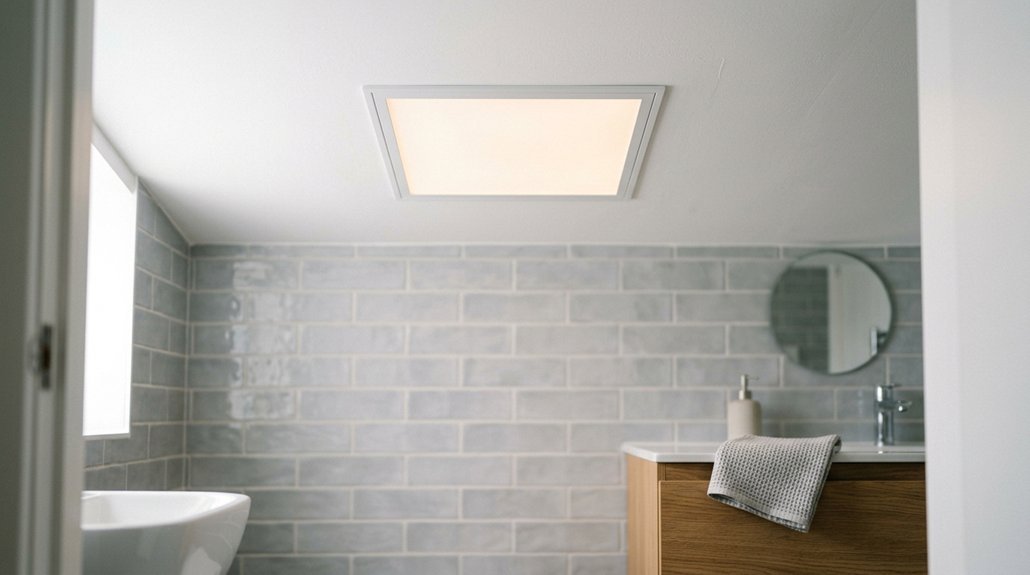
How do you make a cramped bathroom feel like it breathes? You start with a light-reflective ceiling that captures every photon and pushes it back into your small bathroom. White surfaces, specifically those with high LRV (Light Reflectance Value) ratings above 80%, bounce illumination downward, erasing shadow pockets that visually shrink square footage. Pair this strategy with skylights, and you’ve doubled your light sources without sacrificing wall space.
Recessed LED fixtures, spaced 24-36 inches apart, wash these surfaces evenly, eliminating the harsh hotspots of surface-mounted alternatives. Extend glossy tiles upward, meeting the ceiling in an unbroken plane, and you create a continuous envelope that refuses to define where walls end and overhead planes begin. The result: perceptual expansion through material intelligence.
Recommended Products

5-in-1 CCT: Eliminate the Guesswork. Because this recessed ceiling light features a 5-color switch on the J-box, you can physically toggle between 2700K Warm White and 5000K Daylight before installation. This means no more return hassles for buying the wrong color, ensuring the perfect ambiance for any room from a cozy bedroom to a bright, functional kitchen. Versatility is proven by the built-in dip switch supporting 2700K, 3000K, 3500K, 4000K, and 5000K.
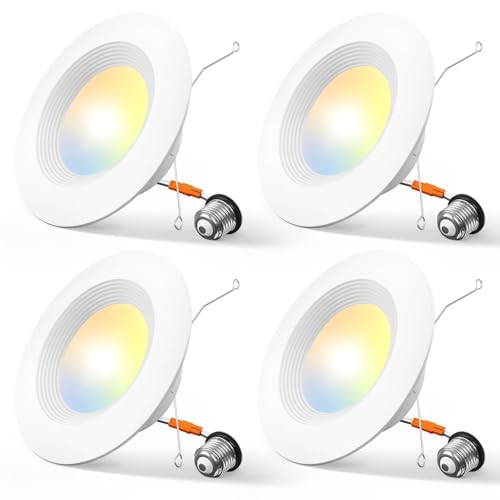
Eye protection: The brightness of the can lights can be smoothly adjusted from 10% to 100%, so you can choose the most comfortable brightness for your eyes. Note: This light is compatible with most dimmers on the market, except for the smart dimmer.

💡【5 CCT-in-1】5 color temperature options (2700K/3000K/3500K/4000K/5000K) for different application scenarios, eliminates the hassle of returning or exchange products due to inappropriate color temperature. Just slide the switch on the side of junction box for your desired color temperature.
Run Beadboard or Shiplap Vertically to Stretch Height
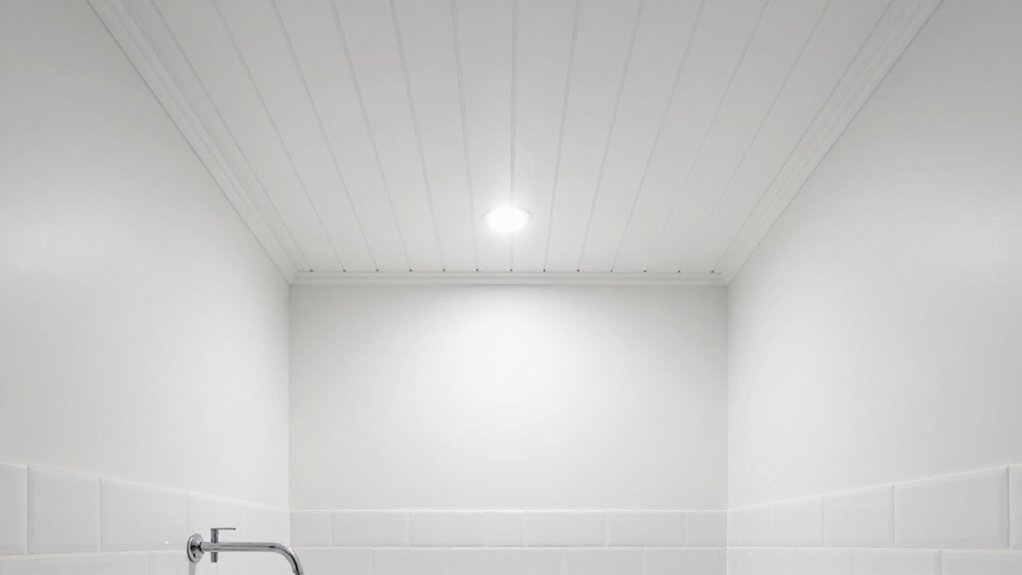
Vertical lines manipulate perception, and when you run beadboard or shiplap upward instead of sideways, you’re fundamentally drawing the eye toward an imaginary vanishing point six to eight inches above your actual ceiling height. This vertical installation doesn’t just stretch your ceiling height visually; it actively conceals imperfections that horizontal layouts would emphasize.
In your small bathroom, you’ll find that beadboard and shiplap installed vertically add substantial architectural texture without consuming precious square footage. The vertical boards channel light downward, amplifying openness when you pair them with white or pale finishes. You’re creating rhythm, directing gazes skyward.
Whether you prefer traditional beadboard detailing or clean, contemporary shiplap panels, this approach adapts well across styles. Combine your vertical treatment with glass shower enclosures and floating vanities for maximum spatial impact.
Recommended Products

Self-Priming formula - requires no sanding

Ready-mixed, grab-n-go white ceiling paint

Vertical aerosol for overhead professional projects
Install Recessed Lighting to Eliminate Visual Clutter
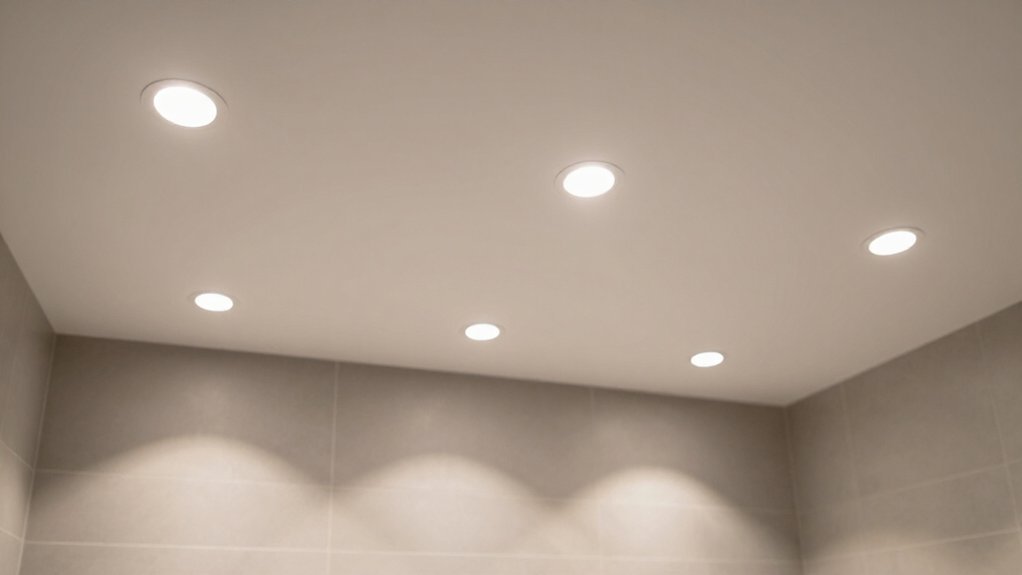
You’ll instantly notice how recessed LED spotlights change your cramped bathroom by sitting flush with the ceiling, eliminating those bulky fixtures that visually weigh down the space while bouncing even, shadow-minimizing brightness across every tile.
This space-saving illumination strategy doesn’t just clear headroom, it actually tricks the eye into perceiving greater vertical volume, particularly essential when you’re working with standard 8-foot ceilings or awkward slopes. Pair your constellation of lights with dimmer-compatible, moisture-rated housings, and you’ve activated layered control: bright task lighting for morning routines or soft ambiance for evening soaks, all wrapped in that clean look.
Recommended Products

【IMMERSIVE BLUE SKY EXPERIENCE】 Transform your dark, windowless spaces into bright, airy sanctuaries. This 2x1 FT artificial skylight perfectly reproduces the depth of the blue sky and the warmth of real sunshine, providing a natural daylight feel for basements, hallways, and offices.
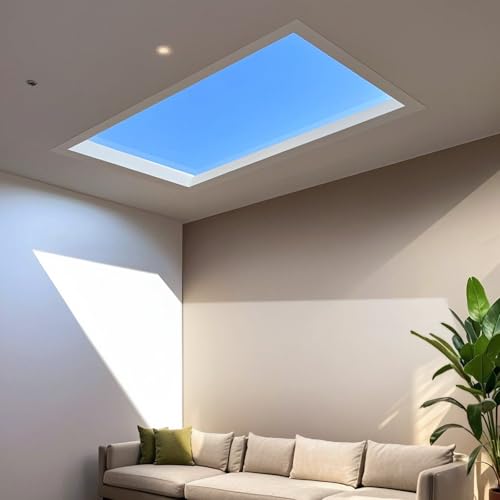
Blue Sky Experience: The artificial skylight ceiling lamp reproduces the ligh of the sun and the sky in just a few centimetres of advanced technology. No matter In your office or at home, library and hospital, you will alway get a peace and relax atmosphere, and experience outdoor sunshine at small space.

【PREMIUM QUALITY & LONG LIFE】 Square surface mount ceiling light led lampshade is made of ABS+PC, long-lasting enough to avoid from damage, quality and well made, lasts over 30,000 hours, reduce lights replacing frequency. This LED flush mount ceiling light has passed LVD / EMC / CE / ROHS certifications
Clean Aesthetic Appeal
Ceiling height matters in cramped quarters, and every inch counts when you’re working with a small bathroom footprint. You’ll maximize perceived ceiling height by choosing recessed lighting, since flush-to-ceiling installations eliminate protruding fixtures that visually crowd your space. These simple, clean designs hide wiring completely, delivering that streamlined look you’re after.
Moisture-resistant LED fixtures prove essential here, standing up to steam and splashes while requiring minimal upkeep. You’ll appreciate how glare-free illumination distributes evenly across your ceiling, banishing harsh shadows that make tight spaces feel smaller. The result is clean, uncluttered overhead planes that expand your room visually.
Opt for dimmable options, and you’ll control ambiance without sacrificing that clutter-free profile. Recessed lighting turns your bathroom ceiling into an architectural feature, proving that smart specification beats decorative excess every time.
Space-Saving Illumination
Recessed LED lighting makes your small bathroom ceiling into a clean, unbroken plane that instantly expands perceived square footage. You’ll notice how flush-to-ceiling fixtures eliminate dangling pendants that chop up vertical space, letting your eye travel uninterrupted across the entire surface. This space-saving illumination strategy doesn’t just look cleaner; it physically frees corners and walls for shelving or mirrors where bulky sconces once dominated.
Consider these advantages:
- Moisture-rated fixtures protect against steam damage, ensuring your investment lasts through years of hot showers
- Dimming switches let you dial ambient brightness from energizing morning routines to calming evening soaks
- Recessed lighting arrays maximize perceived ceiling height through even, shadow-free distribution
- Strategic placement creates task zones without sacrificing the simple, uncluttered look small bathrooms demand
Cut In a Skylight or Solar Tube for Natural Light
You’ll flood your cramped bathroom with daylight when you cut in a skylight or solar tube, instantly reducing your reliance on harsh artificial fixtures while making the ceiling feel miles higher than its actual 8-foot measurement. A standard 2×4-foot fixed skylight pours in up to 30% more lumens than a north-facing window of equal size. Solar tubes, those 10-to-14-inch diameter reflective tunnels, deliver comparable brightness at roughly half the installation cost with minimal roof penetration.
Just remember: proper flashing and moisture barriers aren’t optional extras, they’re your insurance against the rot and mold that’ll wreck your investment if you skimp on the seal.
Flood Space With Daylight
Where else can you steal square footage from but the sky itself? A skylight installation punches through your ceiling to harvest daylight, instantly expanding your bathroom’s perceived boundaries without touching a wall.
You’ll maximize this natural light by pairing it with light-reflective surfaces, glossy tiles that bounce illumination into every corner. Solar tubes offer a streamlined alternative when traditional skylights won’t fit, channeling bright, diffused light through compact ceiling apertures.
Choose operable skylights for passive ventilation and fresh air circulation. Prioritize moisture management with proper flashing and sealed perimeters. Install light-reflective surfaces below to amplify daylight penetration. Verify structural capacity before cutting ceiling joists.
Don’t overlook ventilation; humid bathroom air demands rigorous moisture management around any roof penetration. Done right, you’ll fill your space with natural light that changes everything.
Reduce Artificial Lighting Needs
Daylight streaming through your ceiling does more than brighten dark corners; it fundamentally reshapes how you experience every square foot. You’ll cut in a skylight (or opt for a pocket-friendly solar tube) to harvest natural light directly overhead, slashing your artificial lighting dependence by 70-80% during daytime hours. A full skylight demands roughly 14-21 inches of roof penetration with integrated flashing kits, while a solar tube routes sunshine through a 10-14 inch reflective tunnel, brilliant for tight ceiling designs with limited attic clearance.
You’ll pocket serious energy savings, trimming roughly $100-150 annually off typical bathroom lighting costs. Mind your ventilation: proper moisture barriers and sealed perimeters prevent rot, mold, and insulating nightmares. Natural light doesn’t just illuminate; it turns cramped quarters into airy retreats, no bulb required.
Enhance Perceived Ceiling Height
Because vertical space is the one luxury you can’t fake with mirrors or paint, cutting a skylight directly into your bathroom ceiling becomes the most dramatic lever you can pull. A well-placed skylight floods your small bathroom with daylight, instantly stretching perceived height and dissolving claustrophobic boundaries.
Pair your skylight with a white ceiling to amplify light reflection and vertical expansion. Position daylight strategically to eliminate shadows that compress spatial perception.
Prioritize waterproofing and insulation during installation to prevent moisture damage and thermal loss. Coordinate with pale walls or tiles to maximize the airy, open illusion.
You’ll cut daytime electricity costs while the sun does the heavy lifting. Just plan for potential glare at peak hours, and you’ll turn cramped quarters into a breathable, height-defying retreat.
Paint Ceiling and Walls One Seamless Color
How do you make a cramped bathroom feel twice its actual size without moving a single wall? You paint ceiling and walls one continuous color, removing the visual breaks that chop your small bathroom into smaller pieces. When you extend a cohesive color scheme from floor to ceiling, you create a continuous envelope that tricks the eye into perceiving expanded volume.
Choose light, cool tones like soft whites or pale grays to maximize light reflection, bouncing both natural and artificial illumination throughout the space. This unified approach reduces visual clutter, letting fixtures recede rather than compete for attention.
Select a moisture-resistant finish, semi-gloss or satin, to withstand humidity while maintaining that continuous look. Pair your continuous color with glossy tiles, and you amplify the effect, doubling down on brightness and perceived spaciousness.
Tuck Exhaust Fans and Hardware Above the Ceiling Line
Ceiling real estate disappears fast when bulky exhaust fans and exposed hardware intrude downward, stealing precious vertical inches in bathrooms already starved for breathing room. You reclaim that space by pushing your exhaust fan above the ceiling line, creating a flush surface that reads as pure, uninterrupted plane.
Here’s how you execute this strategy:
Select a tucked exhaust unit with integrated lighting, combining ventilation and illumination in one shallow housing that preserves headroom. Route ductwork through joist cavities with proper slope and vent termination, ensuring moisture control without condensation risks in hidden cavities. Specify moisture-resistant ceiling materials like PVC panels or fiberglass boards that withstand humidity while anchoring your hardware securely.
Verify CFM ratings match your bathroom’s cubic footage, because undersized ventilation defeats the purpose of concealment.
You gain visual calm and functional performance simultaneously.
Recommended Products

DESIGN: Ultra-slim 6 inch led recessed lighting with canless construction eliminates housing requirements, featuring less than 1/2 inch profile for direct ceiling mounting in tight spaces and avoiding joists or ducting.

5 CCT-in-1: 5 color temperature(2700K, 3000K, 3500K, 4000K, 5000K) is selectable to you, which successfully eliminates the hassle of returning or exchange products due to inappropriate color temperature. Just slide the switch on the side of the J-box and you will get the most-desired color that best fit in your room type.

HIGH BRIGHTNESS - Ensenior 4 inch recessed lighting enjoy up to 90% energy savings without compromising on brightness. The enhanced LED chip emits 750LM and consumes only 9 Watts. 5%-100% smooth dimming, compatible with most dimmers.
Weigh Mirror Panels Against High-Gloss Paint Finishes
Where do you turn when your bathroom ceiling needs to pull double duty as both architectural feature and spatial magician? You weigh mirror panels against high-gloss paint finishes, two reflective surfaces that make cramped quarters feel larger through light reflection.
Mirror panels amplify perceived space by bouncing your surroundings back at you, pairing beautifully with GLACIER BLANCO tiles for maximum brightness distribution. High-gloss paint, meanwhile, creates smooth ceiling design that removes texture and spreads light throughout the entire room.
You’ll notice mirror panels excel at spatial expansion, while high-gloss paint prioritizes overall luminosity. Both options deliver clean, simple results. Your choice depends on whether you crave dramatic reflection or quiet polish. Either way, you’re gaining serious visual square footage.
Recommended Products

Ready to use, pre-mixed door and trim paint offers a fresh new look on interior or exterior metal, wood and fiberglass
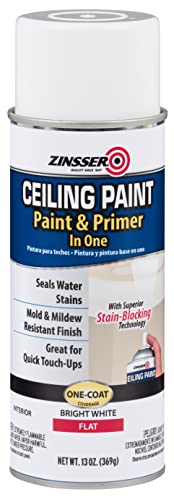
Ceiling spray paint blocks stains and primes interior surfaces for quick touch ups

Use for a variety of indoor and outdoor project surfaces including wood, metal, plaster, masonry or unglazed ceramic