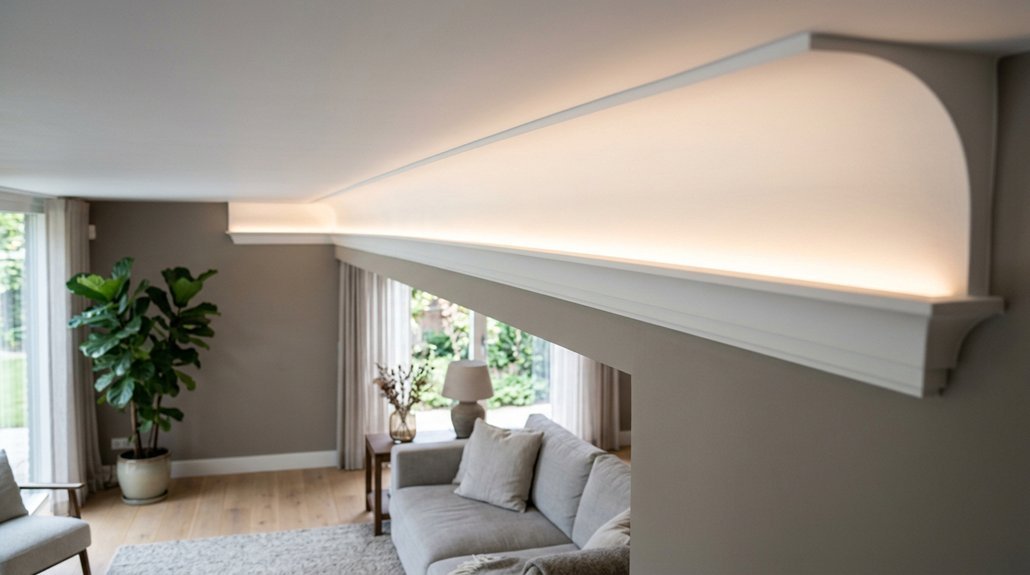
You enter a space and your eyes lift naturally, tracing a smooth, curved arc where wall becomes ceiling rather than striking a harsh corner. That convex progression is a cove ceiling, typically spanning 4 to 12 inches in radius depending on your ceiling height. It removes visual clutter while increasing perceived spaciousness by 15 to 20 percent compared to standard 90-degree junctions.
Unlike crown molding, which sits atop the corner as applied trim, the cove is integral to the architecture itself, formed through custom framing or precision-milled kits that install in roughly half the time of traditional plaster methods. You gain flexibility too: choose a top reveal for classic drama, bottom reveal for contemporary minimalism, or a flush edge for integration with flat ceilings.
The system accommodates LED channels, acoustic treatments, or pure white profiles, and retrofit costs typically run $12 to $35 per linear foot versus $8,000 to $25,000 for full custom builds in average-sized rooms. Whether you prefer ornate curves in a Victorian revival or sharp radii in a loft conversion, this single architectural move changes spatial hierarchy without demanding structural changes.
But before you specify radius dimensions or reveal styles, you need to understand exactly how these edge profiles manipulate light, shadow, and proportion.
What Is a Cove Ceiling?
A cove ceiling changes your room’s most overlooked junction into a sculptural statement, replacing that harsh 90-degree corner where wall meets ceiling with a graceful, continuous curve. You’re essentially softening the architecture itself, trading rigid geometry for fluid movement that draws the eye upward.
This ceiling design creates a curved transition that removes visual clutter while adding depth. You can install it with or without crown molding, depending on your aesthetic goals, and you’ll find prefabricated kits that speed installation without sacrificing customization. The gentle radius works across styles, from traditional parlors to stripped-down lofts.
You’ll notice the spatial psychology immediately. Rooms feel taller, airier, more intentional. The cove ceiling doesn’t merely decorate; it changes how you perceive vertical space, turning structural necessity into deliberate beauty with one graceful, sweeping gesture.
Recommended Products

Note: Suitable for LED light strip types less than 8mm wide. Please note that LED strips are not included.

PACKING INCLUDING: Pack of Ten(10) 1m/3.3ft long segments with Cover. Includes 24pcs end caps(12pcs without hole and 12pcs with hole), 24pcs mounting clips, and 48pcs screws(24pcs for woodiness ,24pcs for ceiling) for easy installation, 2pcs extension connector and 1pcs L-shape corner . The channels can be cut down to any length. Please search B07886RKNV If need extra mounting clips and end caps. LED strips not including.

PACKING INCLUDING: Pack of Ten(10) 2m/6.6ft long segments with Cover. Includes 48pcs end caps(24pcs without hole and 24pcs with hole), 50pcs mounting clips, and 100pcs screws(50pcs for woodiness ,50pcs for ceiling) for easy installation. The channels can be cut down to any length. Please search B07886RKNV If need extra mounting clips and end caps. LED strips not including.
4 Cove Ceiling Edge Styles Explained
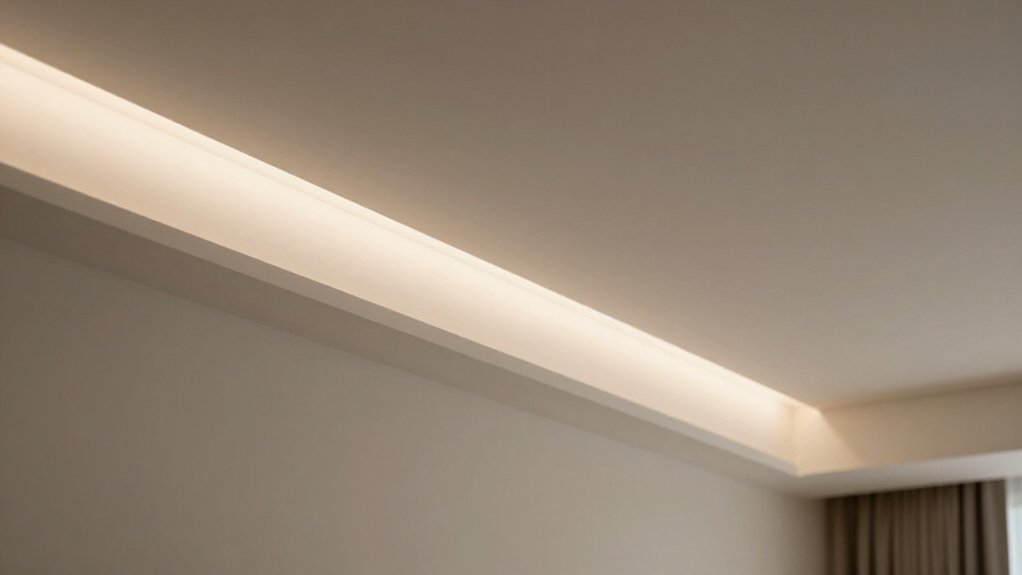
How do you want your cove ceiling to meet the wall? You’ve got four ceiling edge styles to choose from, and each one changes your space in its own way.
Top reveal creates a fur-down effect, lifting your ceiling visually while adding architectural interest. Bottom reveal steps down along the wall where the curve begins. Combine them, and you’ll get a crown-molding-like profile that’s perfect for remodels since you won’t need to tear out existing drywall.
Reveal, reverse reveal, or both—each edge treatment shapes your ceiling’s silhouette without ever touching a single stud.
But maybe you want something cleaner. Seamless coving eliminates all breaks, delivering that flush, uninterrupted surface where wall melts into ceiling without a single visible edge. It’s the purest expression of the form, though it demands more precise installation.
Your choice depends on whether you crave definition or that smooth, modern simplicity.
Recommended Products

Flexible Quarter Round Molding Trim: Measuring 118" L x 0.5" W x 0.5" H, this flexible trim is crafted from high-quality TPE. It is far more flexible and delivers a much more beautiful, seamless finish than most ordinary materials

Very Durable Flexible polyurethane molding

.75" x .75" Flexible Cove (at least 96" long - 8 feet long). Light oak grain texture for gel staining or painting.
Top or Bottom Reveal? Choosing Your Edge Profile
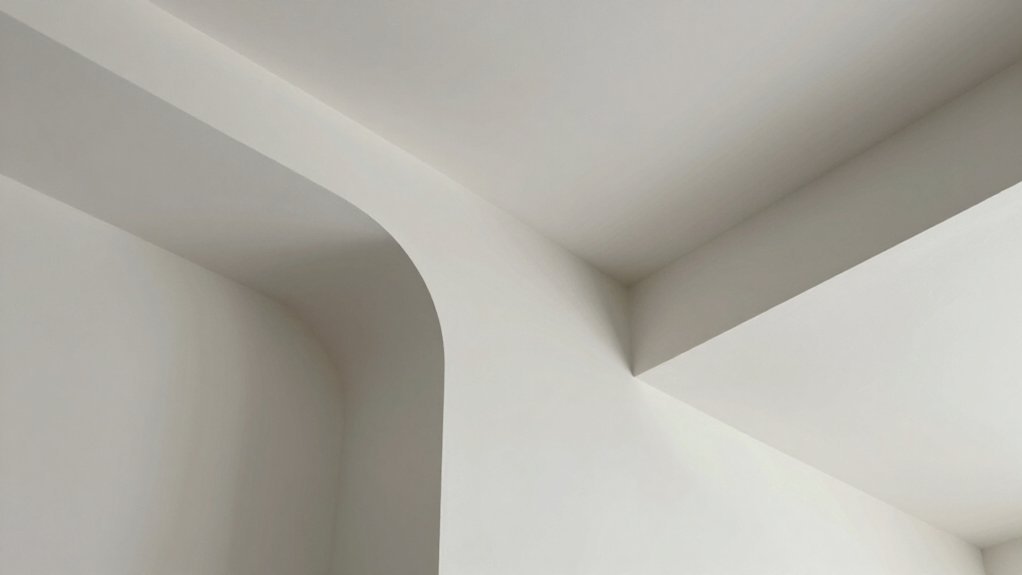
Where your cove meets the wall makes all the difference, and you’ve got three distinct paths to contemplate. Your edge profile choice shapes how cove ceilings change your space.
A top reveal lifts the ceiling visually, adding a gap above the coving that tricks the eye upward. Alternatively, a bottom reveal creates a crisp step where the arch meets the wall, drawing attention to the curve itself.
You can combine both reveals for maximum impact. This crown-moulding-like approach enhances the wall-to-ceiling transition dramatically. It’s the most popular option, especially for remodels where you’re not tearing out drywall.
Or, go seamless. No reveals means no gaps: just smooth plaster flowing from wall to ceiling. This flush finish suits minimalists, though it demands precise craftsmanship.
Each reveal configuration alters perceived height and curve visibility. Choose wisely; your interior aesthetic depends on it.
Recommended Products

All-in-One Design: This set includes 10 pre cut skirting boards with LED light slots, with a total length of 39.4 feet/12 meters; Each length is approximately 47.24 inches/1.2 meters; This LED skirting board with integrated light slots is suitable for modern home ceiling LED skirting board lighting, skirting board LED decorative strips, or indirect lighting systems

【4-Pack Ceiling Molding Kit】This ceiling molding kit includes 4 matching white ceiling corner pieces, each measuring 14 x 14 inches. Perfect for creating a balanced, symmetrical look and completing a full ceiling design in living rooms, dining rooms, bedrooms, or entryways.

2 Rosettes fit most 2-1/4" interior door and window frames - Rosette size 2-3/4" x 2-3/4"
Cove Ceilings vs. Crown Molding: Key Differences
You’ll notice the most striking difference in shape and profile: where crown molding delivers sharp, angular lines that frame your ceiling like traditional trim, a cove ceiling sweeps upward in a smooth, continuous curve that eliminates the corner entirely, creating visual softness and architectural flow.
Your installation approach shifts dramatically too, since crown molding typically involves cutting and coping individual pieces of wood or MDF at precise angles, while cove ceilings (especially with prefabricated kits) let you mount larger, curved sections that integrate reveals or smooth transitions based on your height goals. Choose the curved route, and you’re trading hours of intricate carpentry for a streamlined process that still delivers that custom, high-end finish.
Recommended Products
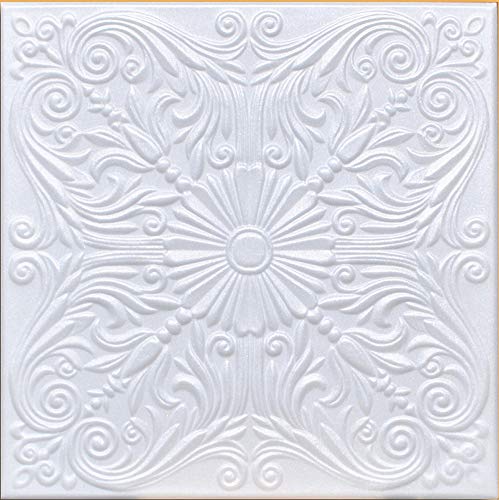
Made from high quality Polystyrene foam
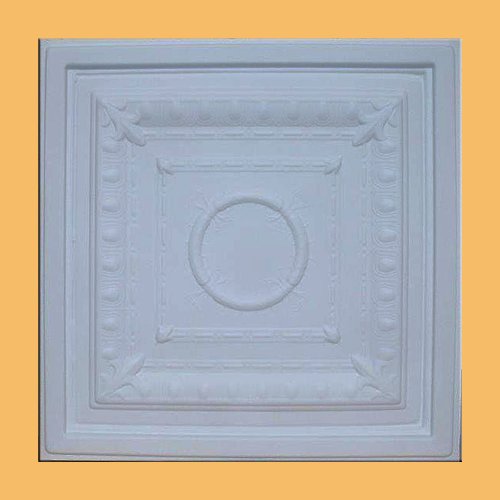
Universal Installation - Drop in Grid system, Glue-on, Nail-on
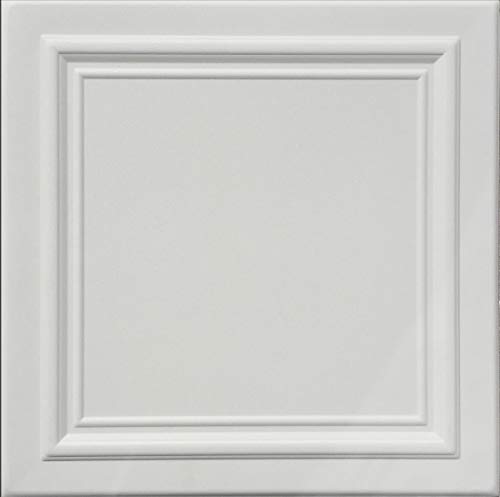
Made from high quality Polystyrene foam
Shape and Profile
Why settle for sharp corners when your ceiling could curve with architectural intention? A cove ceiling changes your wall-ceiling junction through a graceful convex arc, replacing harsh angles with a soft, continuous radius that draws the eye upward. You’ll notice the difference immediately: traditional crown molding stacks decorative profiles, but coving sculpts the architecture itself.
Your design choices extend through customizable reveals, those deliberate gaps between surfaces that control visual weight. Select a top reveal, and you’ll create the illusion of a lifted, floating ceiling; choose a bottom reveal, and you define a crisp step along your wall.
Combine both reveals, and you approximate crown molding’s layered look; eliminate them entirely, and you achieve smooth, uninterrupted flow. Each option reshapes your room’s proportions with mathematical precision.
Installation Approach
Installing a cove ceiling demands a fundamentally different approach than mounting traditional crown molding, and understanding these distinctions saves you from costly mid-project corrections. Your cove ceiling installation centers on a curved radius replacing straight molding, and you’ll choose from four reveal configurations: top reveal (adding a fur-down for lifted-ceiling illusion), bottom reveal (creating a wall step), both reveals, or flush integration. Top and bottom reveals remain most popular for remodels, while flush options deliver continuous, even surfaces.
Prefabricated coving kits make this complex geometry into a manageable weekend project, supplying CAD-visualized measurements and detailed instructions that remove guesswork. You aren’t simply attaching trim; you’re architecturally changing the wall-ceiling junction. The right reveal choice determines whether your space reads as modern simplicity or classic elegance.
Match Your Cove Ceiling to Modern or Traditional Homes
You’ll find cove ceilings remarkably adaptable to your home’s architectural personality, whether you’re drawn to clean, continuous profiles with crisp reveals for a contemporary aesthetic or ornate, flush-mounted curves that channel enduring craftsmanship. Prefabricated kits with CAD precision let you visualize the exact ceiling height illusion (typically gaining 2-4 visual inches) before a single piece is installed.
The material continuity between your cove and existing crown or trim creates that unified, intentional look you’re after, bridging vector-rendered concepts and finished reality with surprising fidelity across both modern open plans and traditional compartmentalized rooms.
Your choice ultimately hinges on balancing bold visual impact with contextual harmony: sharper angles and top reveals expand vertical perception in pared-back spaces, while softer, continuous arcs nestle comfortably alongside wainscoting or coffered details you’d expect in classical interiors.
Recommended Products

PACKING INCLUDING: Pack of Twenty(20) 1m/3.3ft long segments with Cover. Includes 48pcs end caps(24pcs without hole and 24pcs with hole), 50pcs mounting clips, and 100pcs screws(50pcs for woodiness ,50pcs for ceiling) for easy installation, 4pcs extension connector ,2pcs corner. The channels can be cut down to any length. Please search B078N75C7H If need extra mounting clips and end caps. LED strips not including.

PACKAGE INCLUDES: A 10-pack U-shaped black aluminum LED channel kit with ten 3.3 ft channels, ten matching black PC diffuser covers, twenty end caps, twenty mounting clips, and twenty installation screws, everything needed for a complete flush-mount setup.

【Built to Last】 Crafted from high-impact polystyrene material, this crown molding trim is lightweight for easier handling yet sturdy enough to resist warping, moisture, and everyday indoor wear. The long-lasting construction helps maintain its elegant shape over time while offering a decorative upgrade without the heaviness of traditional trim materials. It is a practical option for creating a clean, polished ceiling finish with dependable performance.
Versatile Design Options
Cove ceilings adapt to virtually any architectural vocabulary you’re working with, whether you’re restoring a 1920s Craftsman or finishing a minimalist new build. You can customize your cove ceiling through four distinct reveal configurations, each producing dramatically different spatial effects.
Top reveal coving lifts your ceiling visually by introducing a recessed fur down above the curved transition, creating perceived height without structural modification. Bottom reveal coving generates a stepped curve where the arch meets your wall, delivering a crisp, sculptural cutoff that reads as deliberate architectural punctuation.
Combine both reveals, and you’ll achieve a crown-moulding-like profile with layered shadow lines. Alternatively, specify flush coving for perfectly even wall-ceiling junctions, the preferred solution for ultra-contemporary environments demanding visual continuity.
The dual-reveal option dominates remodels because it frequently eliminates drywall demolition while still delivering dramatic curvature.
Classic or Contemporary
Where exactly should your cove ceiling sit on the design spectrum? You’ll find this architectural element bridges both worlds easily. In traditional spaces, you use the coving ceiling where wall ceiling meets with ornate curves and detailed profiles, recalling classical elegance. For contemporary homes, you strip it back, favoring clean lines with subtle top reveals that create shadow gaps and modern sophistication.
You’re not locked into one aesthetic. The curved transition adapts to your vision, whether you want period drama or minimalist restraint. Prefabricated kits let you experiment across rooms, maintaining consistency without custom carpentry costs. Top reveals particularly work well in modern settings, adding architectural interest without visual weight.
Your cove ceiling becomes whatever you need: a heritage statement or a sleek, forward-looking feature. The choice is yours, and the execution stays simple either way.
DIY Kits or Custom Framing: Installation Options Compared
How do you actually get that curved ceiling look without hiring a specialized crew for weeks on end? You choose between DIY kits and custom framing, two paths that create a coved ceiling without the traditional hassle.
DIY kits ship prefabricated cove ceiling pieces straight to your door, complete with CAD visualization and step-by-step instructions. You measure, order, and install; no specialized carpentry required. These systems typically offer four reveal options, top and bottom being remodel favorites.
DIY kits deliver prefabricated cove ceiling pieces to your door with CAD visualization and step-by-step instructions—no specialized carpentry needed.
Custom framing gives you precise control over your cove profile, letting you align materials exactly where ceiling meets wall. You get tailored reveals and smooth transitions, though you’ll need competent trim carpenters.
Both methods beat traditional crown molding for speed, consistency, and often cost. You decide: packaged convenience, or bespoke craftsmanship?
Recommended Products
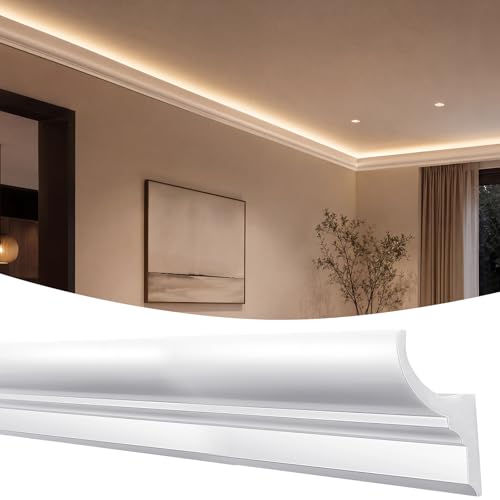
LED Baseboard with Integrated Light Trough: each pack contains 6 pcs pre-cut crown moulding with LED light channels, , totaling 23.62 feet/7.2 meters in length; Each rail is approximately 47.24 inches/1.2 meters; This baseboard is ideal for LED ceiling lights, LED baseboard trim, or indirect lighting systems in stylish homes (glue not included)

Premium Solid Hardwood Molding – Milled in the USA for a durable and crisp detail

Moisture proof. Can withstand extreme heat and cold temps without warping or cracking.
Cove Ceiling Costs, Timeline, and Home Value Impact
Why settle for ordinary when you can raise your entire living space with architectural drama that pays for itself? Cove ceilings deliver upscale aesthetics at lower cost than traditional crown molding, boosting perceived home value without breaking your budget.
You’ll choose from four installation methods: top reveals, bottom reveals, both, or smooth transitions. Top and bottom reveals work best for remodels, minimizing drywall removal and disruption. Smooth designs demand precise framing but reward you with cleaner, high-end results.
Prefabricated kits and CAD-guided measurements streamline your timeline, reducing on-site labor substantially. Material choices and prefabrication level directly impact your final costs.
Whether you’re building new or renovating, you’re investing in architectural distinction that distinguishes your property in competitive markets, turning ordinary rooms into memorable spaces buyers remember.
Recommended Products

Package Contents: Our package includes 4 white ceiling corner decor featuring an exquisite pattern design. These ornaments will add an elegant and charming European style to your home, creating a captivating backdrop for ceiling fans and light fixtures

What You Will Receive: you will receive 3 sets of pre cut wall decorations, each set has 10 pcs, total 30 pcs, which can be freely matched according to your needs, they attaches easily and gives doors or walls elegant finished look
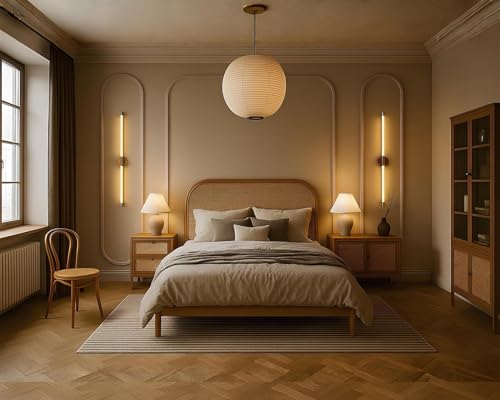
BOLD ARCH DESIGN – CREATE A STATEMENT WALL | Curved and straight pre-cut MDF pieces let you build elegant arch patterns and frame-style layouts that give any room a custom, high-end look without hiring a carpenter. Made in Türkiye