Expert Home Style – For the Price of a Coffee ($3.90)
Master high-end design secrets (Tuscan, Modern) without the expensive consultants.
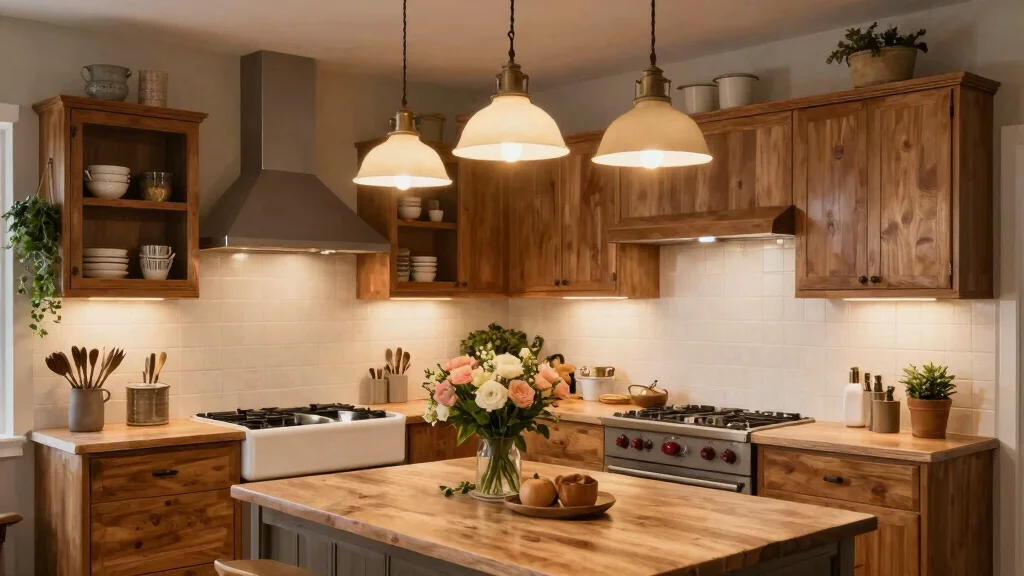
🛒 Buy NowCreating the perfect kitchen lighting layout can feel like a daunting task, especially when there are so many styles to choose from. The right lighting not only sets the mood but also enhances functionality in one of the most frequently used spaces in your home. Whether you’re cooking up a storm or enjoying a quiet cup of coffee, the lighting should be just right. That’s why I put together this post—to help you discover how to illuminate your kitchen beautifully while embracing vintage vibes.
If you’re passionate about home decor and love the charm of vintage kitchen styles, you’ll find this guide especially helpful. You want your kitchen to reflect your personality, and that includes the lighting fixtures you choose. From retro pendant lights to classic chandeliers, there’s something for everyone. This post includes 17 creative kitchen lighting layout ideas that will inspire you to make your kitchen not only functional but also a warm and inviting space.
By the end of this guide, you’ll have a clearer vision of how to achieve perfect kitchen illumination. With practical tips and stylish ideas, you’ll be ready to transform your kitchen into a space that’s both cozy and highly functional. Let’s dive into the world of kitchen lighting design and find the perfect fixtures for your home!
Key Takeaways
– Explore a variety of kitchen lighting options, including retro pendant lights and classic chandeliers, to find the style that best suits your space.
– Understand how under-cabinet lighting can add both practicality and ambiance to your kitchen, making it easier to cook and entertain.
– Consider vintage wall sconces and exposed bulbs to add character and charm to your kitchen while enhancing the overall decor.
– Discover the benefits of layering different types of lighting, such as ambient, task, and accent lighting, to create a balanced and inviting atmosphere.
– Get inspired by innovative ideas like skylights and seasonal lighting changes that can refresh the look of your kitchen throughout the year.
1. Retro Pendant Lights Over the Island
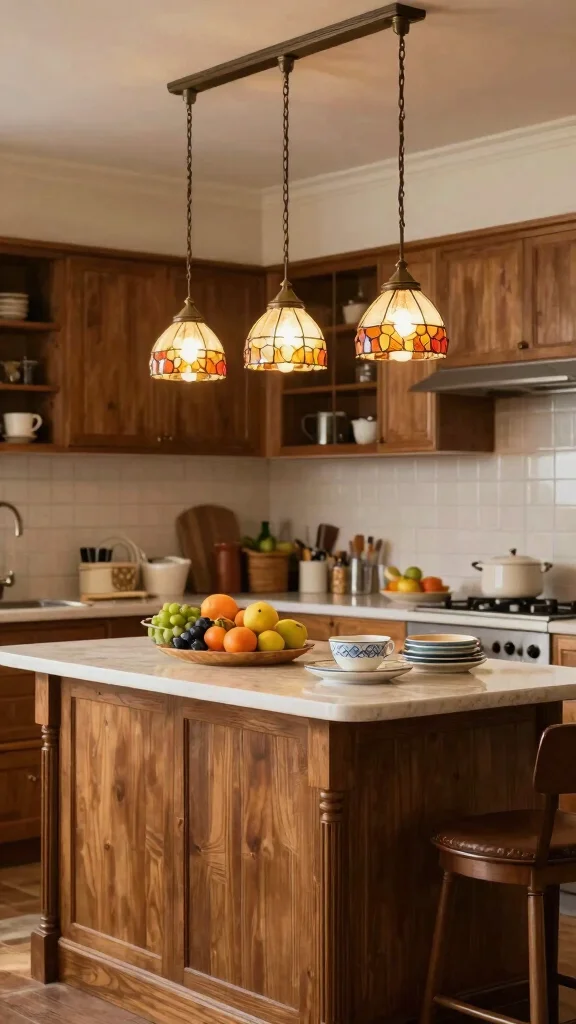
Retro pendant lights hanging above your kitchen island can create a delightful visual centerpiece. This style not only enhances the aesthetic appeal but also provides essential task lighting for meal preparation. Imagine colored glass shades or vintage metal finishes casting a warm glow while adding a pop of color to your space. Aim to position these pendants 30-36 inches above the island for optimal illumination and impact.
For practical implementation, consider shopping at thrift stores or online marketplaces for budget-friendly options. Layer your lighting by combining these pendants with under-cabinet lights to ensure functionality and ambiance. This design choice aligns beautifully with the current trend of mixing vintage charm with modern practicality.
Kitchen Lighting Design Tips:
– Pair colorful shades with neutral cabinetry for a stunning contrast.
– Install dimmable bulbs to adjust brightness based on the time of day.
– Use multiple pendants for a more dramatic effect over larger islands.
With the right retro pendant lights, your kitchen island becomes a warm gathering spot, perfect for family and friends to come together.
Key Trade-offs & Our Top Pick
Option 1: Vintage Pendant Lights
– Pros:
– Adds a nostalgic charm to your kitchen.
– Comes in various styles, colors, and sizes to fit your decor.
– Excellent for providing focused lighting over kitchen islands or dining areas.
– Cons:
– May require more maintenance to keep the vintage look pristine.
– Can be expensive, especially for rare designs.
– Limited ambient lighting unless combined with other fixtures.
– Best for: A cozy kitchen with a retro vibe, particularly over islands or dining tables.
Option 2: Vintage Wall Sconces
– Pros:
– Saves counter space while offering soft ambient lighting.
– Easy to install and can accentuate wall art or decor.
– Provides a warm glow, enhancing the kitchen’s atmosphere.
– Cons:
– Limited light output compared to ceiling fixtures.
– Requires proper placement to avoid shadowy areas.
– May not provide enough brightness for cooking tasks.
– Best for: Small or narrow kitchens where counter space is at a premium.
Option 3: Vintage Track Lighting
– Pros:
– Versatile; you can adjust the direction of the lights as needed.
– Offers a modern twist on vintage flair.
– Great for illuminating different areas of the kitchen, including artwork.
– Cons:
– Installation can be complex if you’re not handy.
– Might be more expensive due to installation costs and the need for multiple fixtures.
– Requires maintenance of the tracks and bulbs.
– Best for: Open kitchens with high ceilings or unique architectural designs.
Option 4: Vintage Chandeliers
– Pros:
– Creates a stunning centerpiece that adds elegance to your kitchen.
– Available in various styles that can complement different decor choices.
– Provides ample ambient lighting when chosen correctly.
– Cons:
– Requires ceiling height for proper installation; not ideal for low ceilings.
– More expensive due to their size and design complexity.
– Needs regular cleaning to avoid dust buildup on the fixtures.
– Best for: Large kitchens or dining areas where you want to make a bold statement.
Expert Recommendation:
Best Overall: Vintage Pendant Lights
Vintage pendant lights are the best choice for most people. They combine the charm of vintage design with functionality, making them versatile for various kitchen layouts. They provide focused lighting while enhancing your kitchen’s decor without overwhelming the space. They are generally affordable and easy to install, making them a smart investment for long-term use.
Why We Picked This:
While vintage pendant lights are our top pick, some might prefer wall sconces for space-saving solutions or chandeliers for their statement-making ability. Each option has its unique appeal and will suit different tastes and kitchen styles. Make sure to assess your kitchen’s layout and your lighting needs before making a final decision!
2. Classic Chandeliers for a Touch of Elegance
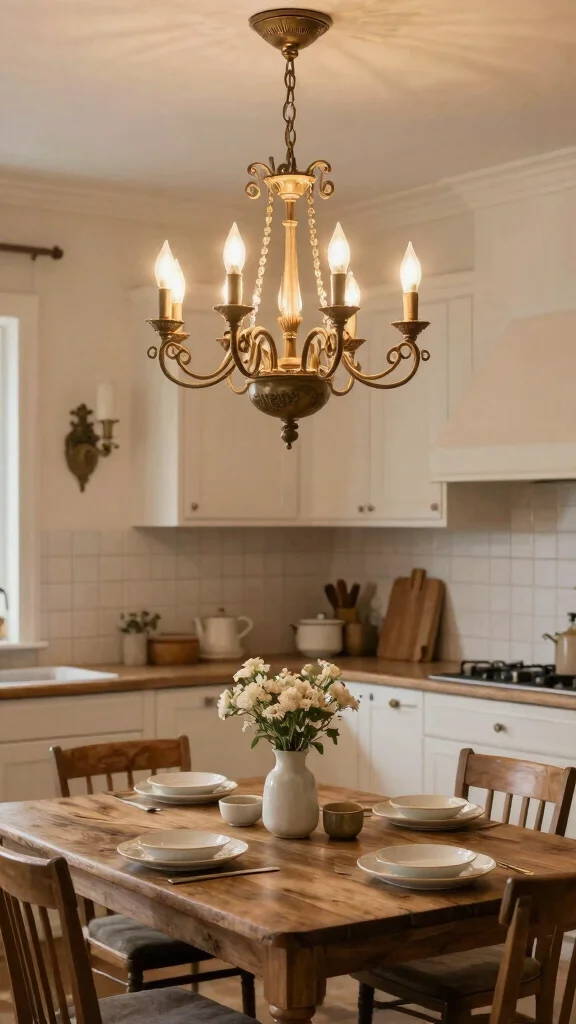
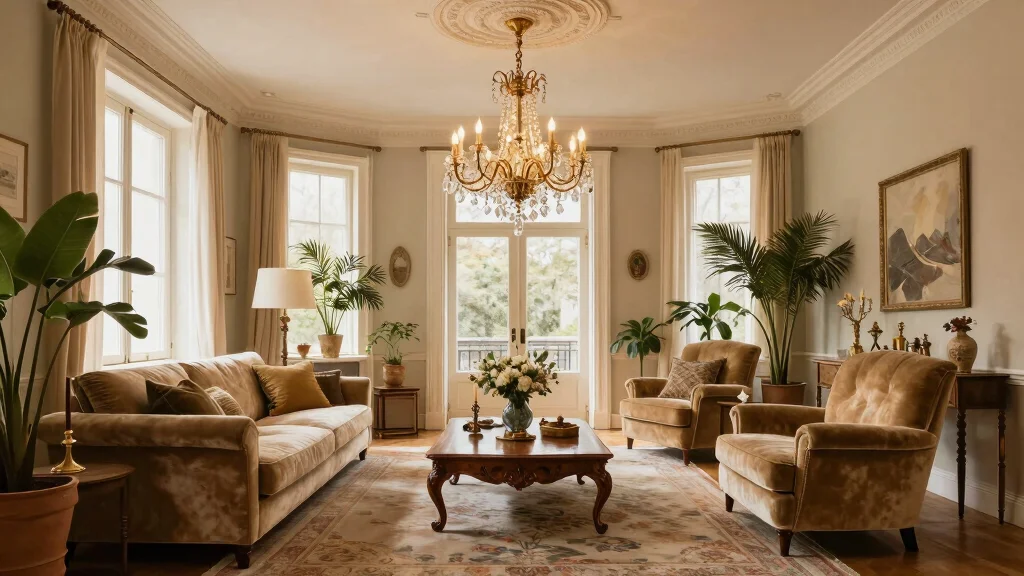
Introducing a classic chandelier into your kitchen can elevate the space with a touch of elegance. These stunning fixtures are no longer confined to dining rooms; they can become the centerpiece of your kitchen, adding sophistication to any style. Consider hanging a wrought iron or crystal chandelier above your dining area or kitchen island to create a dramatic focal point.
For practical implementation, ensure the chandelier’s size is proportional to your kitchen dimensions. Installing a dimmer switch allows you to easily adjust the lighting for various occasions, from lively family dinners to intimate gatherings. This trend showcases a seamless blend of traditional elegance and modern functionality.
Kitchen Illumination Tips:
– Choose a chandelier that reflects your personal aesthetic, whether classic or contemporary.
– Add complementary wall sconces for layered lighting effects.
– Adjust the chandelier height to suit the overall layout of your kitchen.
This lighting choice transforms your kitchen into an enchanting space, ideal for both culinary creativity and entertaining guests.
✨ Transform Your Home Effortlessly
Unlock your home’s full potential with expert DIY tips for stunning makeovers in every room.
3. Under-Cabinet Lighting for Practicality
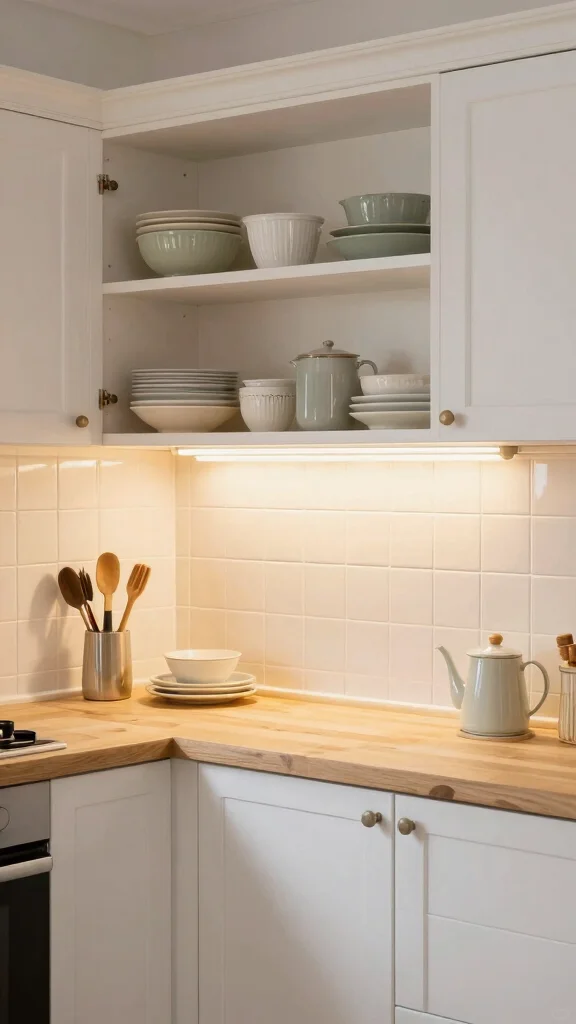
Under-cabinet lighting is a smart and stylish solution for enhancing your kitchen’s functionality. These lights not only illuminate your workspace but also highlight beautiful countertops and backsplashes, creating a warm and inviting atmosphere. Using LED strip lights or puck lights under your cabinets can provide a modern touch while maintaining a cozy vintage feel.
For effective implementation, consider placing the lights in strategic locations to minimize shadows during meal prep. Dimmable options can help you adjust brightness levels depending on the time of day. This approach taps into the broader trend of combining practicality with aesthetic appeal in kitchen design.
Kitchen Lighting Design Insights:
– Position lights to ensure even illumination across countertops.
– Combine with pendant lighting for a layered effect.
– Opt for warm white tones to enhance the inviting feel.
This simple addition dramatically improves your kitchen’s atmosphere, making it both functional and stylish.
4. Vintage Wall Sconces for Added Character
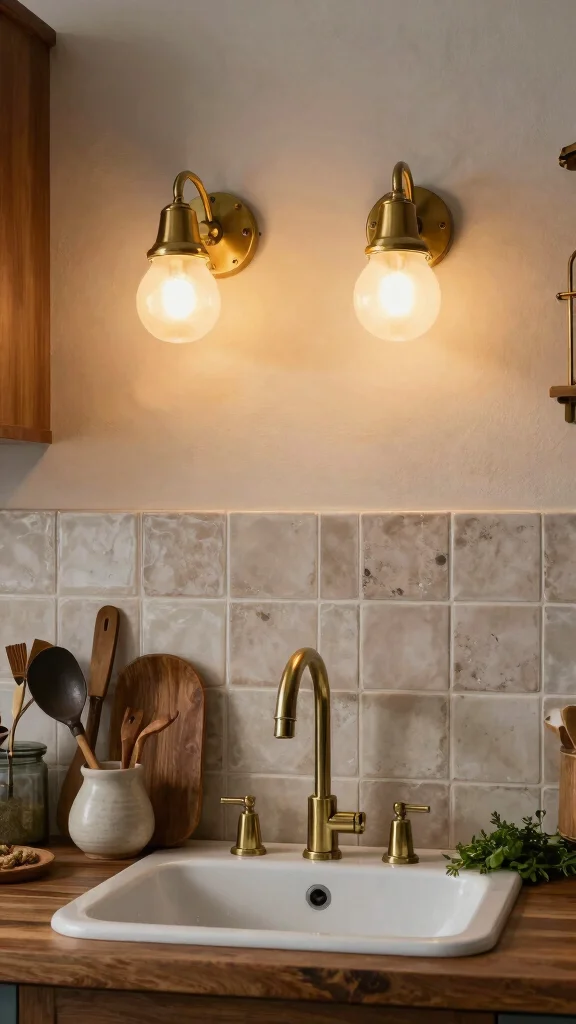
Vintage wall sconces are an ideal choice for infusing your kitchen with unique character. These fixtures can be strategically placed above sinks or on bare walls, providing additional lighting while creating a cozy ambiance. Opt for materials like distressed wood or brass to evoke an antique charm that complements your decor.
For effective placement, install sconces around 60-66 inches from the floor for optimal lighting. Dimmable options can provide flexibility, allowing for soft lighting during relaxed evenings or brighter illumination for cooking tasks. This design choice resonates with the trend of enhancing functionality while preserving vintage aesthetics.
Unique Insights:
– Pair sconces with other light sources for a well-rounded design.
– Choose fixtures that echo your kitchen’s overall style for cohesion.
– Ensure proper spacing between sconces to maintain balance.
The right wall sconces add both charm and practicality, enhancing your kitchen’s overall aesthetic and functionality.
5. Statement Track Lighting for Versatility
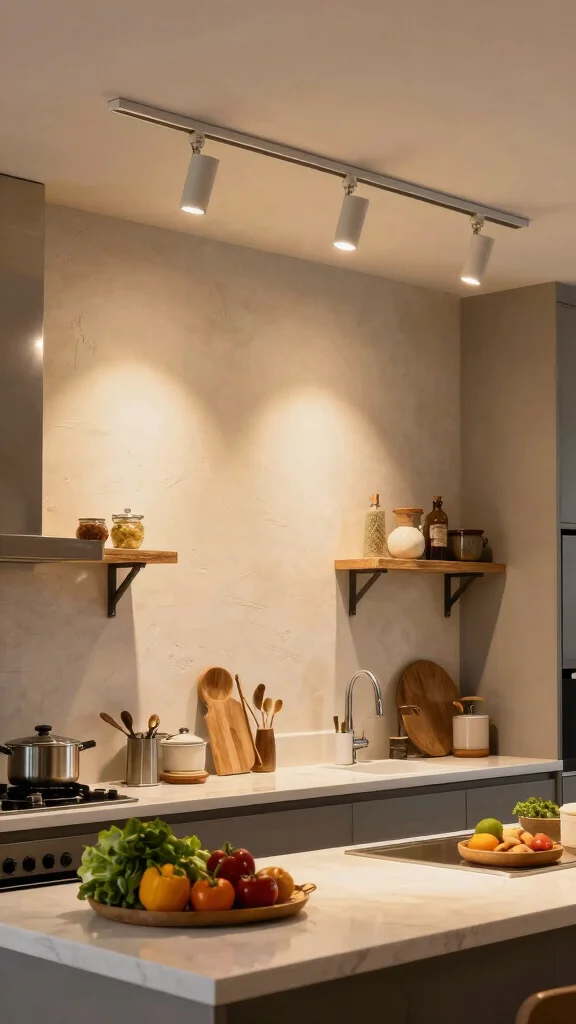
Statement track lighting is an excellent choice for adding both style and functionality to your kitchen. These fixtures allow you to direct light to where it’s needed most, whether illuminating the island, sink, or cooking area. Opt for vintage-inspired designs with adjustable heads to highlight the best features of your kitchen.
To implement track lighting effectively, consider installing dimmers to easily switch from bright task lighting to softer ambient light. Using multiple tracks can offer more coverage, especially in spacious kitchens. This versatile lighting solution aligns with modern design trends that emphasize both style and practicality.
Kitchen Illumination Tips:
– Create zones by focusing light on specific areas of your kitchen.
– Pair with ambient lighting for a layered effect.
– Choose finishes that complement your kitchen’s overall style.
With track lighting, your kitchen gains a functional yet stylish touch, bringing attention to its unique features.
6. Lantern-Style Lighting for Rustic Charm
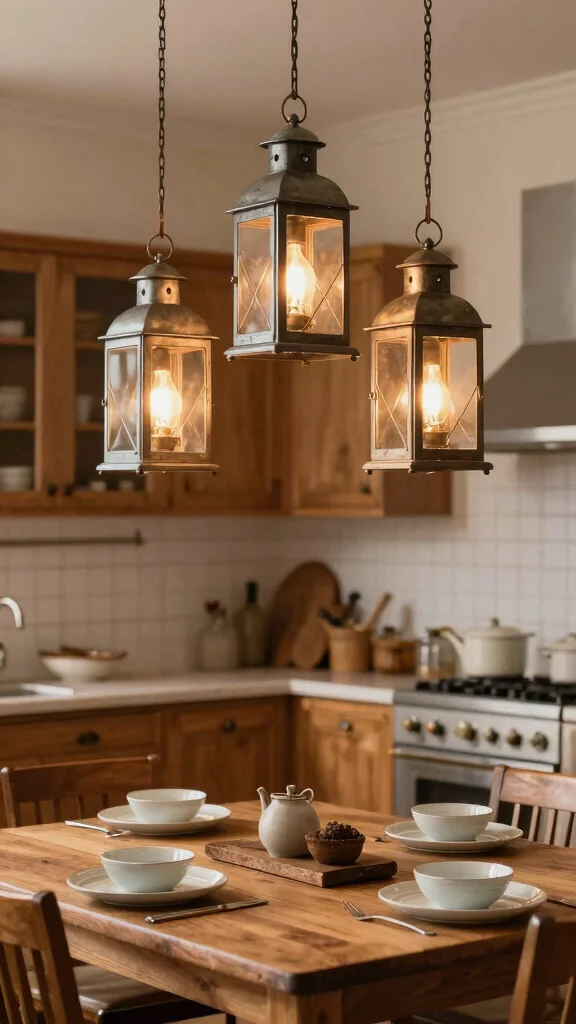
Lantern-style lighting infuses your kitchen with rustic charm, making it feel cozy and inviting. These fixtures work beautifully above islands or dining tables, creating an atmosphere that encourages gatherings and conversations. Look for designs that incorporate wood and metal elements for an authentic farmhouse vibe.
For proper placement, hang lanterns approximately 30-36 inches above surfaces to ensure adequate lighting without obstructing views. Combining lanterns with other light sources can enhance brightness and provide layered lighting. This style choice resonates with the current trend of embracing rustic aesthetics in modern design.
Design Considerations:
– Choose finishes that harmonize with your kitchen’s color palette.
– Use dimmable bulbs to adjust ambiance based on activities.
– Pair lanterns with wall sconces for added depth.
Lantern-style lighting serves a practical purpose while enhancing your kitchen’s decor, creating a warm and welcoming environment.
7. Recessed Lighting for Clean Lines
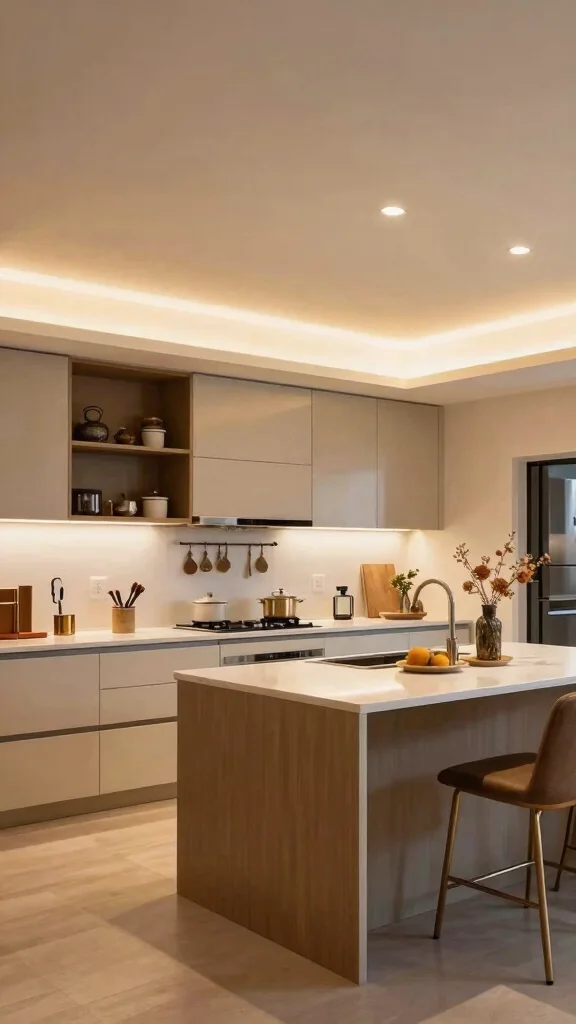
Recessed lighting offers a sleek and modern option for illuminating your vintage kitchen. These fixtures blend seamlessly into the ceiling, providing unobtrusive lighting that maintains clean lines. Installing warm LED bulbs can contribute to a cozy atmosphere that vintage styles often require.
For effective implementation, space recessed lights 4-6 feet apart to avoid dark areas and ensure even illumination. Utilizing dimmers allows you to adjust brightness based on your activities and the time of day. This approach aligns with the trend of incorporating modern design elements into traditional spaces.
Kitchen Lighting Design Insights:
– Layer with pendant lights for added visual interest.
– Ensure proper placement around key areas like prep zones.
– Choose fixtures that enhance the overall vintage aesthetic.
This lighting choice creates an open and airy feel, perfect for a modern vintage kitchen.
You might also like
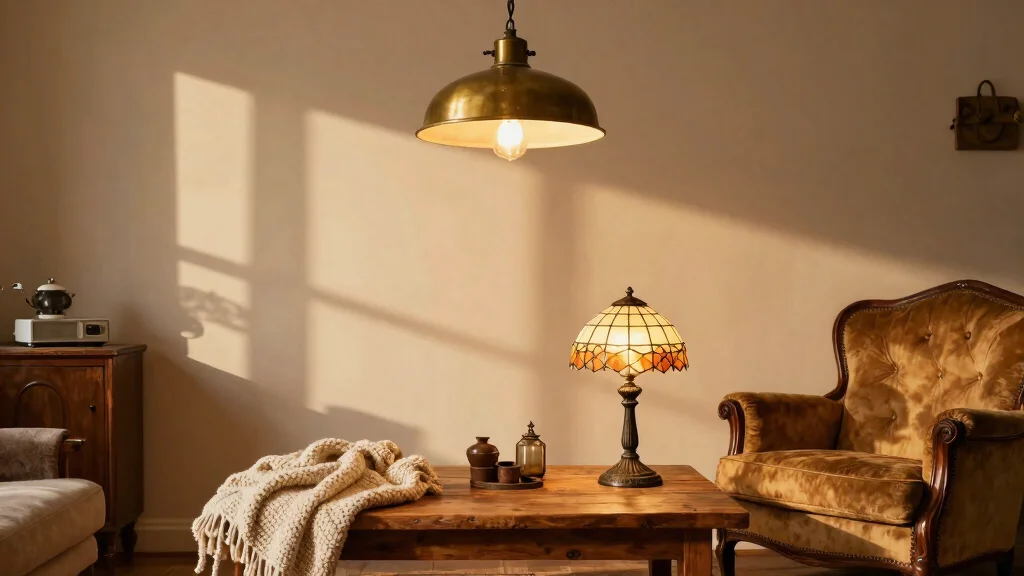
8. Vintage Light Fixtures for a Nostalgic Vibe
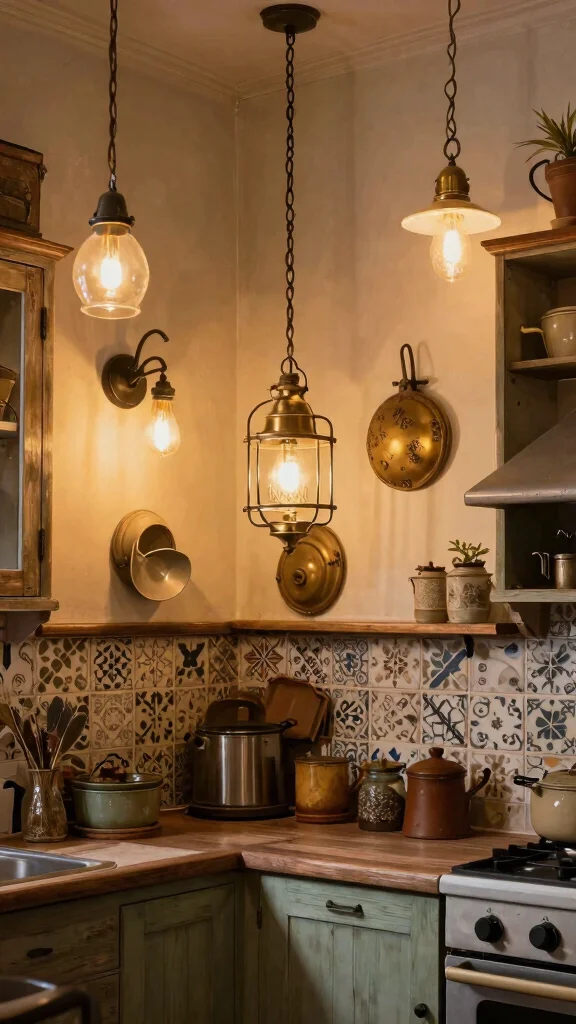
Incorporating vintage light fixtures is a fantastic way to evoke nostalgia in your kitchen. Seek out unique pieces that reflect your desired era, whether it’s Art Deco or Mid-century. These fixtures not only illuminate but also serve as captivating focal points that spark conversation.
Creating a well-rounded look can involve mixing pendant lights, chandeliers, and sconces. Finishes like aged brass or rustic wood can enhance the nostalgic atmosphere while ensuring functionality. This design choice plays into the trend of celebrating individual style through distinctive decor.
Kitchen Illumination Tips:
– Hang fixtures at various heights for visual interest.
– Combine vintage and modern elements for a balanced aesthetic.
– Maintain appropriate wattage to ensure adequate lighting for tasks.
Vintage fixtures infuse your kitchen with character and charm, making the space truly special.
9. Adjustable Floor Lamps for Flexibility
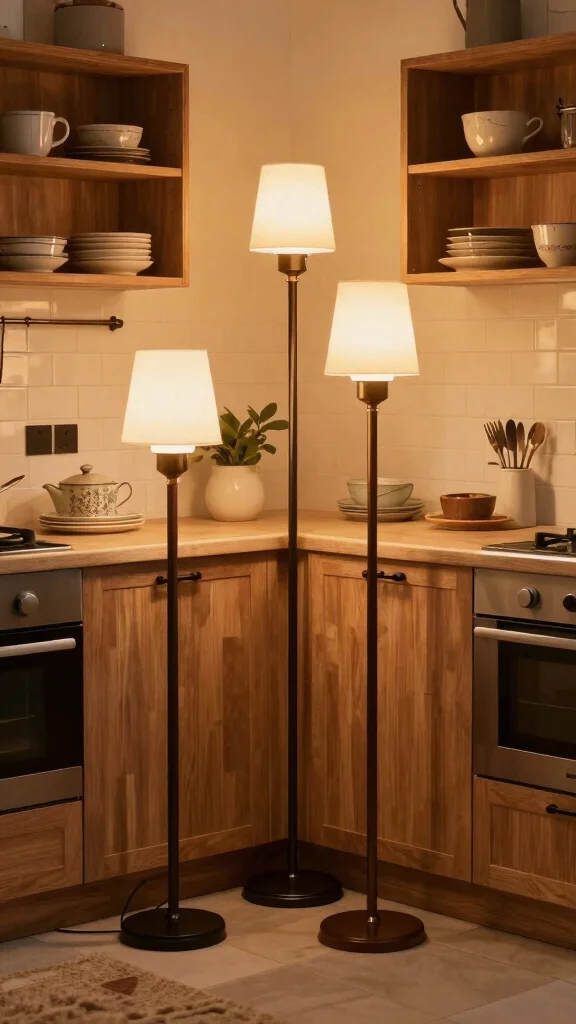
Adjustable floor lamps are a versatile addition that brings both style and functionality to your kitchen. Ideal for corners or cozy reading nooks, these lamps can be repositioned to provide light wherever it’s needed most. Look for vintage-inspired designs that complement your kitchen’s decor, perhaps with interesting shapes or tripod bases.
For optimal use, position these lamps near seating areas, creating a warm glow perfect for entertaining or enjoying a quiet moment. Choosing colors that either complement or contrast your existing palette can make these lamps stand out as statement pieces. This approach aligns with the trend of blending comfort and style in home design.
Unique Insights:
– Use LED bulbs for energy efficiency while maintaining a cozy atmosphere.
– Ensure the lamp height is adjustable to suit different needs.
– Consider using a lamp with a dimmer for added flexibility in lighting.
Adding floor lamps enhances your kitchen’s ambiance, making it feel more like a welcoming living space.
10. Colorful Accent Lighting for Personality
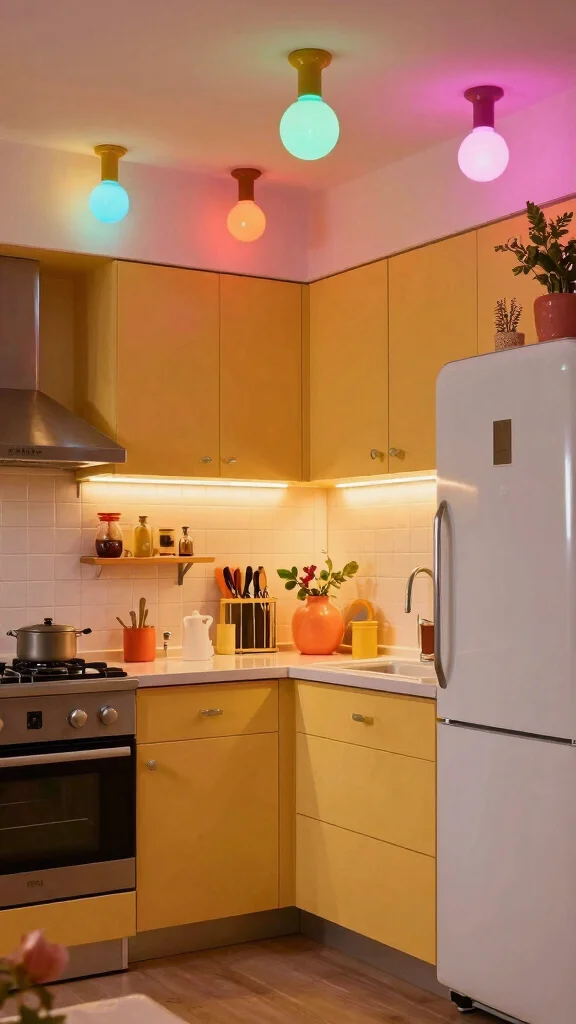
Incorporating colorful accent lighting can bring a lively touch to your kitchen. Consider using LED strips or colored bulbs to highlight specific areas, such as above cabinets or under shelves. This trendy approach not only adds depth and warmth but also allows you to express your unique style.
For practical implementation, think about using color-changing LED lights that adapt to your mood or occasion. Strategically placing these accents can draw attention to your favorite decor pieces while maintaining overall harmony in your design. This aligns with the trend of personal expression through home decor.
Design Considerations:
– Ensure colors coordinate with your kitchen’s theme for a cohesive look.
– Use fixtures that offer different brightness levels for versatility.
– Keep in mind the overall lighting balance to avoid overpowering spaces.
Colorful accent lighting can transform a simple kitchen into a vibrant space, full of life and style.
11. Skylights for Natural Light
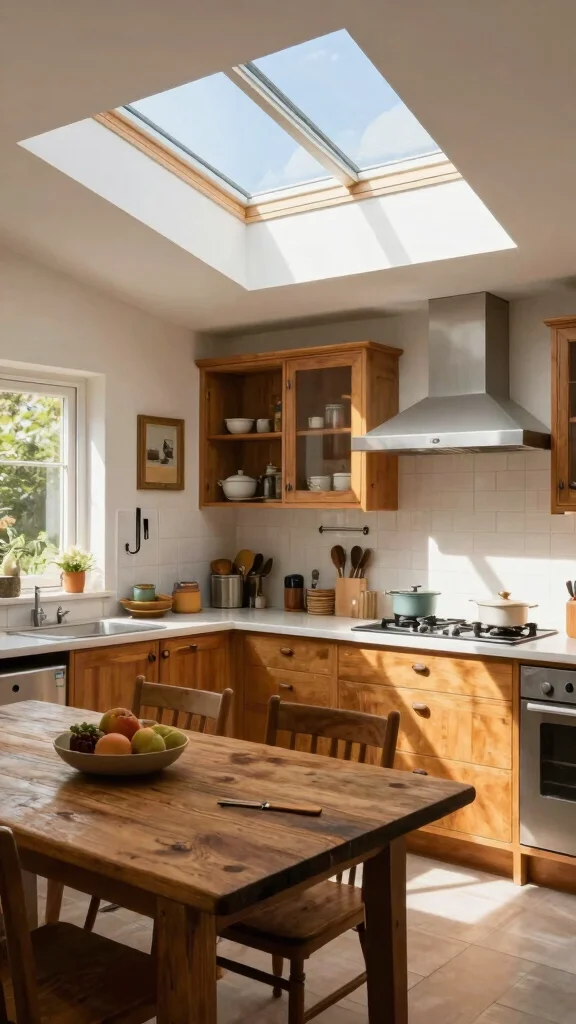
Skylights are a wonderful way to invite natural light into your kitchen, enhancing its brightness and creating an airy atmosphere. They connect your indoor space with the outdoors, making the kitchen feel more expansive. Installing skylights transforms the mood of your space, allowing abundant sunlight to fill even the smallest kitchens.
For effective use, consider opting for tinted glass to control sunlight levels and prevent overheating. Pairing skylights with blinds or shades allows you to manage light intensity throughout the day. This design choice aligns beautifully with the trend of emphasizing natural light in home design.
Kitchen Illumination Tips:
– Ensure the skylight design complements your vintage decor for visual harmony.
– Position skylights to maximize sunlight exposure based on your kitchen’s layout.
– Incorporate reflective surfaces to enhance natural light distribution.
Utilizing natural light invigorates your kitchen, creating a warm and inviting environment perfect for family gatherings.
12. Vintage Ceiling Fans with Light Fixtures
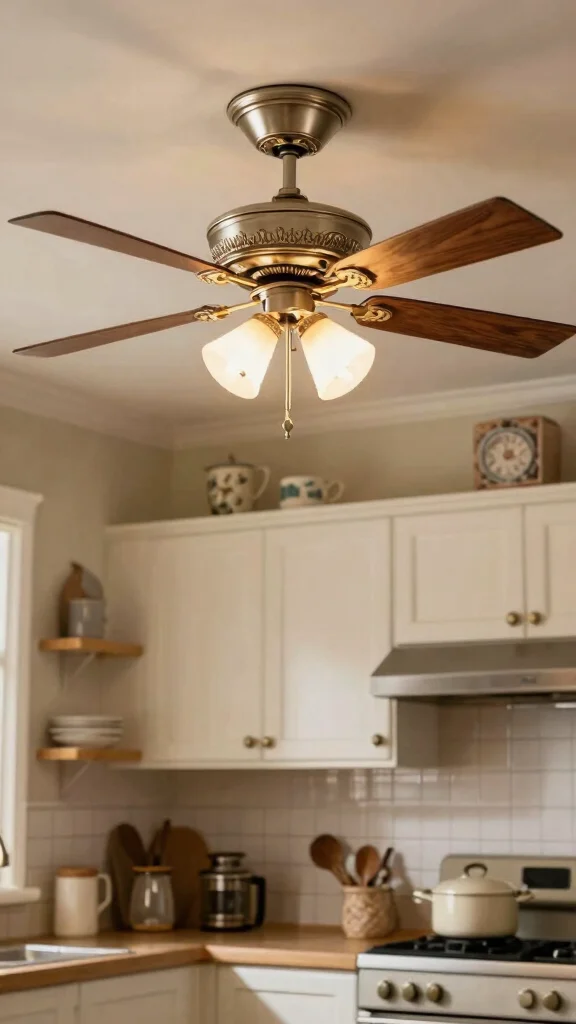
Combining vintage ceiling fans with integrated light fixtures can beautifully merge style and functionality in your kitchen. These fans are perfect for larger spaces, providing cooling breezes while illuminating your area. Opt for designs featuring wrought iron or wooden elements to enhance your vintage aesthetic.
To maximize effectiveness, ensure the fan is appropriately sized for your kitchen to optimize airflow and light distribution. Energy-efficient bulbs can help reduce energy costs while maintaining a cozy ambiance. This approach embraces the trend of incorporating multifunctional pieces into home design.
Unique Insights:
– Consider fan speed settings that accommodate seasonal changes for year-round comfort.
– Choose finishes that tie into your kitchen’s overall theme for cohesion.
– Ensure the light fixture complements the ceiling fan for a unified look.
The right ceiling fan enhances both the comfort and charm of your vintage kitchen, creating an inviting atmosphere.
13. Exposed Bulbs for an Industrial Touch

Exposed bulbs add an industrial flair that can beautifully contrast with vintage kitchen elements. These fixtures showcase the bulbs themselves, making a bold statement while maintaining a sleek design. Hanging them at various heights or clustering them can create a dynamic visual impact while ensuring ample illumination.
To implement this style effectively, consider using Edison bulbs for a touch of vintage appeal. Combining exposed bulbs with other vintage elements can harmonize the overall design, reinforcing the trend of blending styles for unique aesthetics.
Kitchen Lighting Design Insights:
– Cluster multiple fixtures to create a dramatic focal point over dining areas.
– Experiment with various bulb shapes and sizes to enhance visual interest.
– Ensure the overall color palette remains cohesive despite the mix of styles.
Exposed bulbs can elevate your kitchen’s style, making it feel both trendy and timeless.
You Might Also Like
14. Accent Lighting for Artwork and Decor
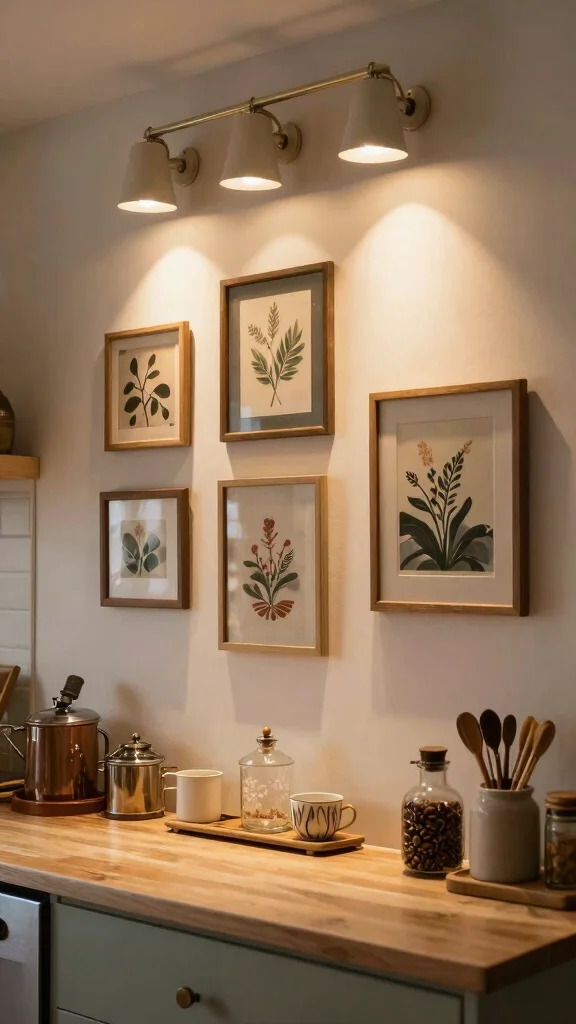
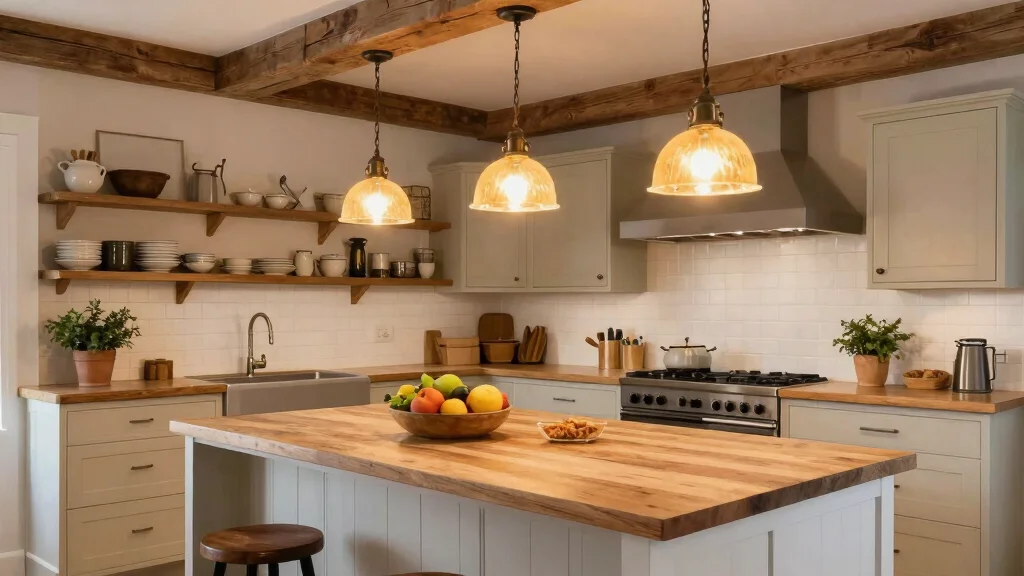
Accent lighting is essential for showcasing beautiful artwork and decorative pieces in your kitchen. Using track lighting or small spotlights can draw attention to your favorite items, enhancing the visual appeal of your space. This technique not only highlights your decor but also allows you to express your personality through your kitchen design.
For effective placement, position accent lights at an angle of 30-45 degrees from the artwork to create depth and intrigue. Dimmable fixtures can help you adjust brightness based on the mood or time of day. This approach aligns with the trend of emphasizing personal expression through curated decor.
Unique Insights:
– Choose warm-toned bulbs for vintage styles to enhance warmth.
– Ensure proper spacing between accent lights for even coverage.
– Incorporate adjustable fixtures for flexibility in highlighting different pieces.
With the right accent lighting, your kitchen decor can shine, making every meal a celebrated moment.
Accent lighting makes your favorite pieces feel gallery-ready in a heartbeat. With a smart kitchen lighting layout, angle lights at 30-45 degrees to add depth and shine to artwork and decor—your space will look personal, polished, and instantly inviting.
15. Layered Lighting for a Balanced Look
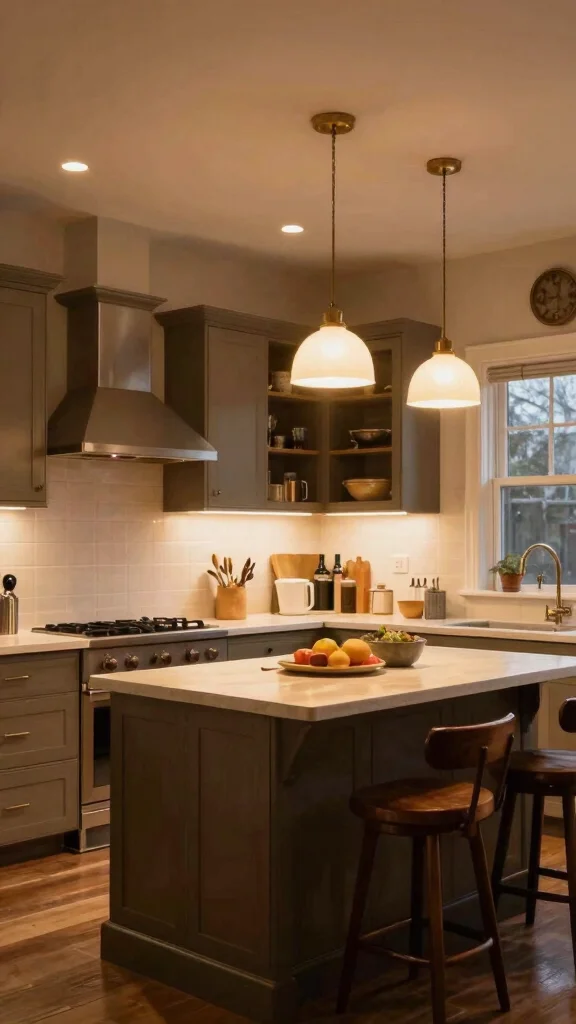
Layering your lighting sources is crucial for achieving a well-balanced look in your kitchen. This involves combining ambient, task, and accent lighting to create an inviting atmosphere that meets various needs. Start with ambient lighting, such as recessed lights or chandeliers, then add task lighting above the island and accent lighting to highlight decor.
For practical implementation, plan your layout in zones, considering areas for food preparation, cooking, and dining. Utilize natural light sources whenever possible, complementing them with artificial lighting for a well-rounded effect. This design choice reflects the trend of creating functional spaces that are warm and inviting.
Kitchen Illumination Tips:
– Regularly assess your lighting to adapt to changing needs and styles.
– Incorporate dimmers to adjust lighting based on activities.
– Choose fixtures that harmonize in style and finish for visual coherence.
A well-layered lighting design enhances your kitchen’s beauty, making it a more enjoyable place to cook and gather.
16. Combining Vintage with Modern Fixtures
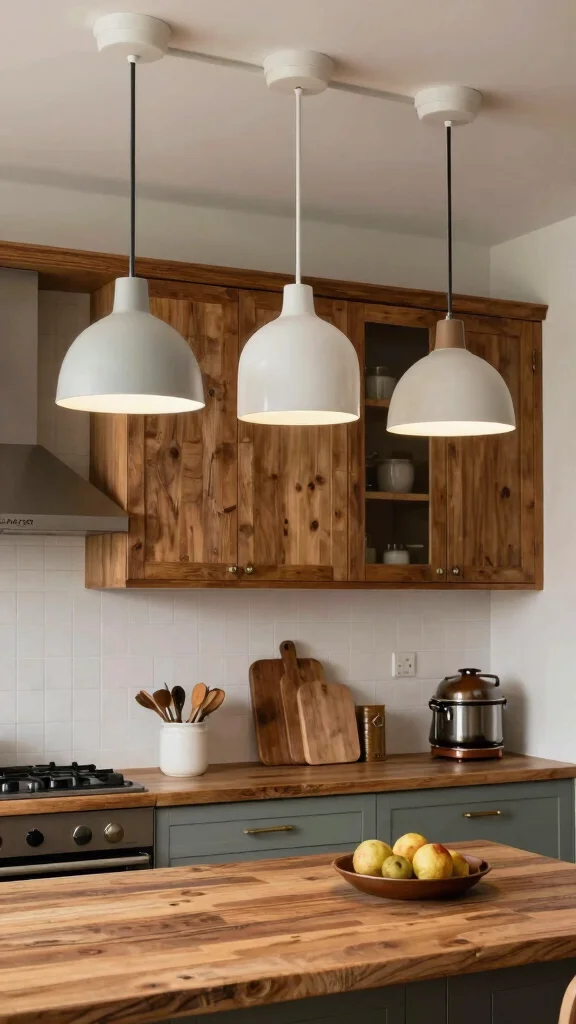
Blending vintage and modern fixtures can elevate your kitchen’s design, resulting in a unique and eclectic space. This approach creates a bold statement by juxtaposing sleek contemporary lines with nostalgic charm. For instance, pairing modern pendant lights with rustic wooden beams can create a striking visual contrast.
To effectively implement this design, choose finishes that tie both styles together, such as brass or matte black. Maintaining a cohesive color palette can prevent a chaotic look while allowing for a playful mix of elements. This trend emphasizes personal expression and individuality in home design.
Kitchen Lighting Design Insights:
– Select fixtures that complement each other, even if from different eras.
– Use textures and materials that harmonize the overall aesthetic.
– Highlight key features of the kitchen with focused lighting.
This design approach lets you showcase your personal style while ensuring your kitchen remains functional and inviting.
Mixing vintage charm with modern glow is where kitchens come alive. Start small: swap in brass or matte black fixtures and tie the room together with a cohesive color palette. Trust the contrast—your kitchen will feel timeless and inviting.
17. Seasonal Lighting Changes for Freshness
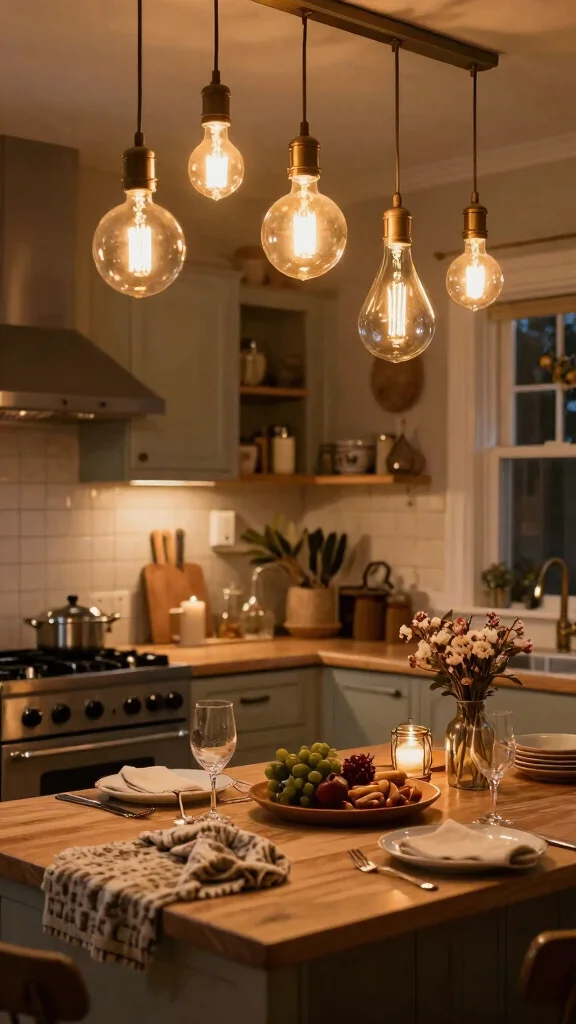
Changing your kitchen lighting seasonally can keep the space feeling fresh and inviting! Consider swapping lightbulbs, switching out fixtures, or adding seasonal decor items that bring new energy to your kitchen. For winter, warm bulbs create a snug atmosphere, while bright, cool bulbs can invigorate the space during summer months.
For practical implementation, keep a collection of bulbs and fixtures on hand for easy swaps. Adapt your lighting to reflect seasonal themes, such as warm tones for fall and vibrant shades for spring. This dynamic approach encourages creativity and personal expression in your kitchen design.
Unique Insights:
– Use decorative pieces that easily transform your kitchen’s look and feel.
– Pay attention to the time of year and adjust your lighting accordingly.
– Incorporate elements that can evolve with the seasons for a cohesive design.
By embracing seasonal changes in lighting, your kitchen can feel like a new space throughout the year.
Fun fact: swapping bulbs by season can refresh your kitchen lighting layout with 2 simple tweaks—warm bulbs in winter and bright cool bulbs in summer. Plus, keeping a small bulb and fixture collection makes swaps quick and painless.
Conclusion
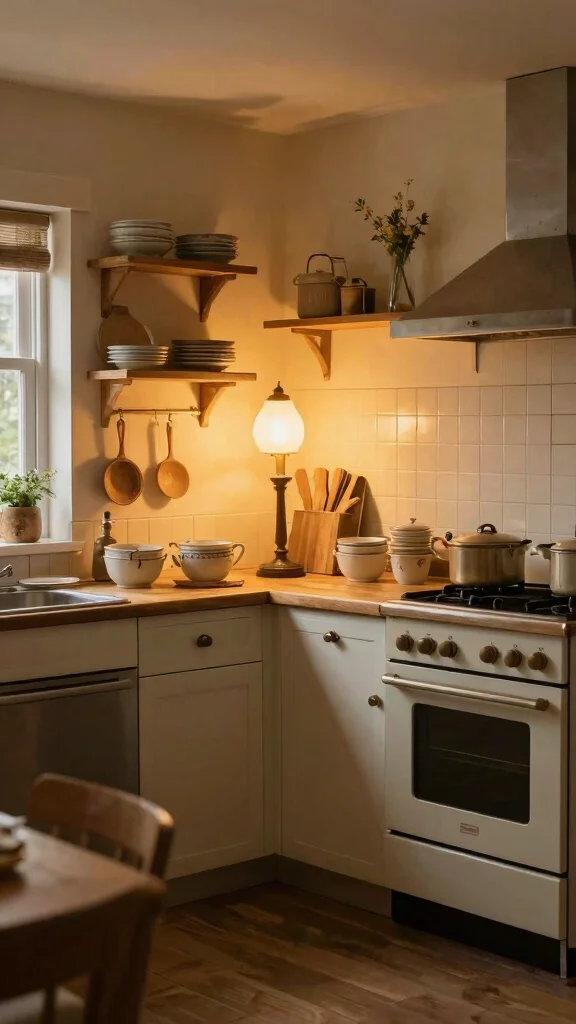
Lighting is an essential element of kitchen design, especially in vintage spaces. The right layout and fixtures can breathe life into your kitchen, making it both functional and beautiful.
From retro pendants to elegant chandeliers, each lighting choice adds character and warmth. With these 17 ideas in mind, you can create the perfect illumination that reflects your style and enhances your cooking space. Consider experimenting with different layouts and design elements to discover what works best for you and your vintage kitchen.
Frequently Asked Questions
How can I plan a vintage-inspired kitchen lighting layout that still feels modern?
Planning a vintage-inspired kitchen lighting layout starts with a clear plan. Map the space into ambient, task, and accent layers, then choose fixtures that blend retro charm with modern efficiency.
For ambient lighting, aim for warm, diffuse light (2700–3000K) from ceiling fixtures or recessed lights. For task lighting, add under-cabinet lights and focused pendant or wall lamps over prep zones.
For accent lighting, highlight vintage details with brass sconces or decorative fixtures. Ensure you wire dimmers and keep the overall feel cohesive with kitchen illumination tips and kitchen lighting design guidance. This keeps your kitchen lighting layout practical and beautiful for everyday use.
What are the best pendant lights for kitchens in a vintage setup?
Vintage setups shine when you mix brass, glass, and schoolhouse styles with modern efficiency. Pendants for kitchens should be grouped in multiples rather than a single oversized fixture, and hung about 30–36 inches above the island or counter to balance the space.
Choose dimmable LEDs in warm white (2700K) and pair them with modern kitchen fixtures so they read vintage but still feel current. Keep spacing even to support practical kitchen illumination tips while preserving the charm of your kitchen lighting layout.
How do I balance ambient kitchen lighting with task lighting in my kitchen layout?
Balancing ambient kitchen lighting with task lighting starts with layering. Use a warm, evenly lit ambient layer from ceiling or recessed lights, then add under-cabinet lights for precise prep work, and include adjustable wall lamps or pendant spotlights to target key areas.
Choose fixtures with consistent color temperature and dimmers to avoid harsh shadows or glare, and aim for good contrast between bright work zones and softer room lighting. This simple layering is a cornerstone of kitchen lighting design and kitchen illumination tips that you can implement today.
What common mistakes should I avoid when designing a kitchen lighting layout?
Common mistakes include skipping layered lighting and relying on a single central fixture, choosing lights that are too bright or too cool, and neglecting under-cabinet illumination.
Also watch for glare from shiny shades, and don’t forget dimmers so you can adjust mood and function. When you design your kitchen lighting layout, map zones, pick fixtures with appropriate scale, and test brightness at eye level during different times of day.
These kitchen illumination tips will help you avoid overloading or mismatching vintage details with modern fixtures.
How can I adapt a vintage kitchen lighting layout for a small kitchen?
To adapt a vintage kitchen lighting layout for a small space, keep fixtures scaled to the room and avoid crowding the ceiling. Choose compact pendants or a slim track system and add bright under-cabinet LEDs to keep work surfaces clear.
Use warm finishes like brass to preserve vintage charm and incorporate reflective surfaces or light colors to bounce light around. Finish with dimmers so you can adjust ambience, keeping your ambient kitchen lighting balanced with kitchen lighting design principles.
Related Topics
home decor
kitchen lighting layout
vintage style
ambient lighting
pendant lights
modern fixtures
lighting design tips
easy updates
kitchen illumination
DIY kitchen lighting
bright spaces
decor trends