Expert Home Style – For the Price of a Coffee ($3.90)
Master high-end design secrets (Tuscan, Modern) without the expensive consultants.
🛒 Buy NowCreating the perfect kitchen lighting plan can feel like a daunting task. Balancing style, functionality, and sustainability is no easy feat. But this journey is worth it! A well-lit kitchen not only improves visibility but also enhances the overall ambiance of your home. You want a space where cooking feels joyful and inviting, right? That’s why I’ve gathered these 18 kitchen lighting plan ideas. They offer creative solutions for every taste and need, ensuring you can find the right fit for your space.
If you’re passionate about home decor and want to make your kitchen shine, this post is tailored for you. Whether you’re a seasoned chef or someone who just enjoys making a quick meal, good lighting can dramatically change how you experience your kitchen. You’ll discover various options, from modern kitchen lights to eco-friendly choices, that can transform your cooking area into a well-lit haven.
Get ready to explore a variety of practical and beautiful kitchen lighting ideas that will inspire you to rethink your existing setup. You’ll learn how to incorporate ambient kitchen lighting, utilize LED kitchen fixtures, and even add a touch of vintage charm. Whether you’re planning a complete renovation or simply looking to refresh your space, this guide will equip you with the insights and inspiration you need to create a well-lit, sustainable kitchen.
Key Takeaways
– Diverse Lighting Solutions: Explore a range of kitchen lighting designs including pendant lights, recessed options, and decorative fixtures that suit different styles.
– Sustainable Choices: Consider eco-friendly light fixtures and solar-powered options to reduce energy consumption while enhancing your kitchen’s aesthetic.
– Layered Lighting Strategy: Implement a layered approach by combining ambient, task, and accent lighting for a balanced and functional space.
– Smart Technology Integration: Discover the benefits of smart lighting systems that allow you to control brightness and color with ease, adding convenience to your cooking experience.
– Creative and Stylish Elements: From vintage fixtures to modern designs, find inspiration in unique light styles that reflect your personality while brightening up your kitchen.
1. Pendant Lights with LED Bulbs
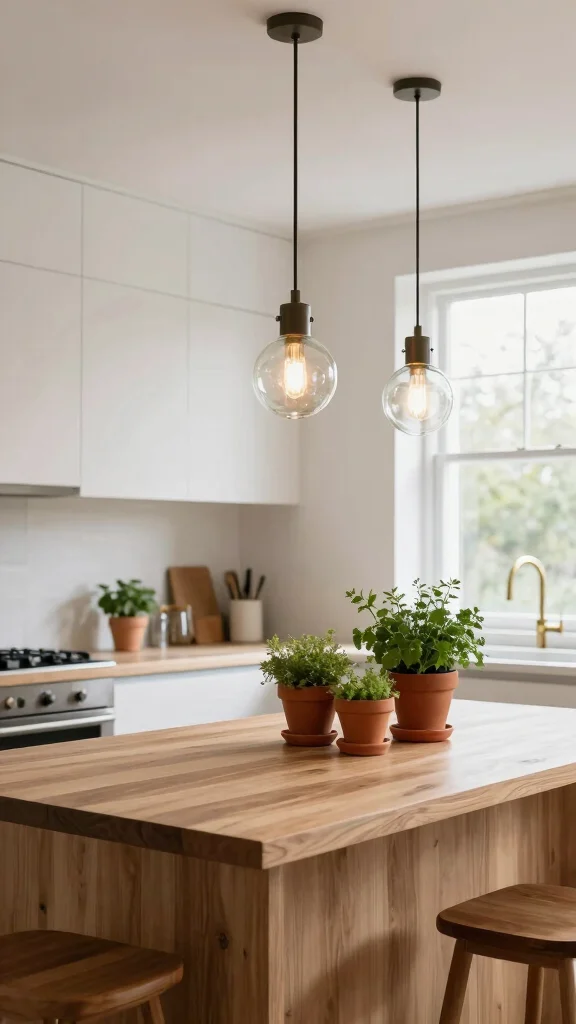
Pendant lights add a stylish touch to any kitchen, especially when you incorporate energy-efficient LED bulbs. These fixtures come in a variety of designs, from sleek modern styles to rustic industrial options, providing visual interest and functionality. Hanging above kitchen islands or dining tables, they create a warm ambiance while ensuring ample illumination. The combination of pendant lights with LED bulbs not only enhances sustainability but also allows for longer-lasting and energy-efficient lighting solutions. Don’t forget to consider dimmer switches for added versatility, enabling you to adjust the lighting to suit any occasion.
Here’s why you’ll love them:
– Pair them with warm wood elements for a cozy feel.
– Use dimmable options to create the perfect atmosphere.
– Choose designs that highlight your kitchen’s unique style.
With this thoughtful approach, you can achieve a chic and inviting kitchen that maintains an eco-friendly edge while showcasing beautiful textures and materials.
🏡 Transform Your Home Today!
Unlock the secrets to stunning kitchen makeovers with our DIY guide and elevate your decor sustainably.
2. Under-Cabinet Lighting
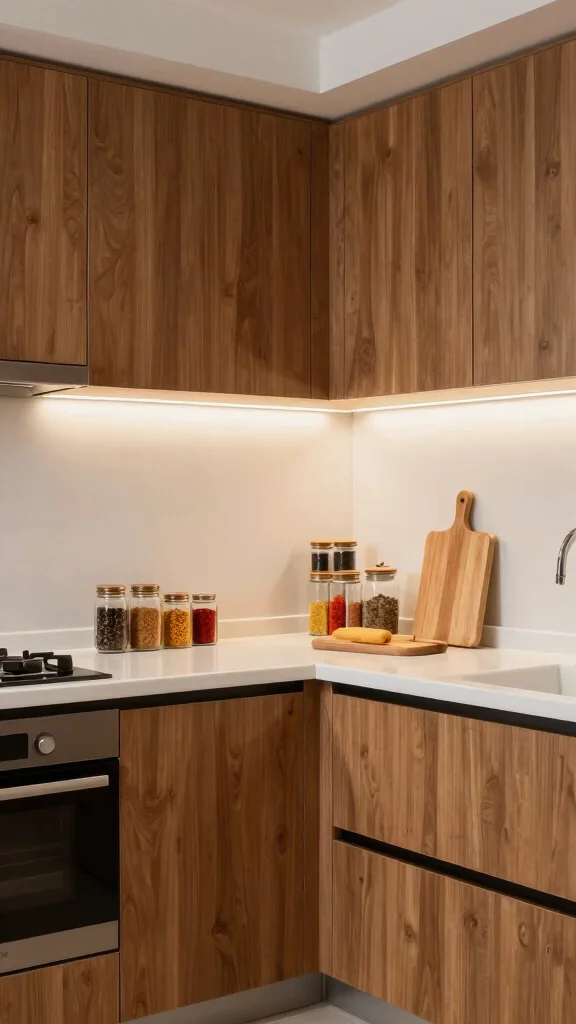
Under-cabinet lighting is a smart way to enhance brightness in your kitchen without sacrificing space. These discreet fixtures provide targeted illumination directly on your countertops, making food preparation easier and more enjoyable. Options like LED strips or puck lights are not only easy to install but also come in a variety of colors and intensities to match your kitchen’s aesthetic. By creating a layered lighting effect, under-cabinet lights add depth and warmth to your cooking area while improving functionality.
Consider energy-efficient options that can connect to smart home systems for added convenience and control.
– Install motion sensors to activate the lights automatically.
– Choose warm light tones for a cozy atmosphere.
– Use adjustable fixtures for customized lighting angles.
With this strategic lighting, you can create a welcoming environment that elevates both the style and functionality of your kitchen.
Under-cabinet lighting is the secret to a practical kitchen lighting plan. Start with a simple setup—LED strips along the toe-kick or puck lights under cabinets—and adjust brightness to tackle prep, glare, and mood, all without crowding your counters.
3. Solar-Powered Outdoor Kitchen Lights
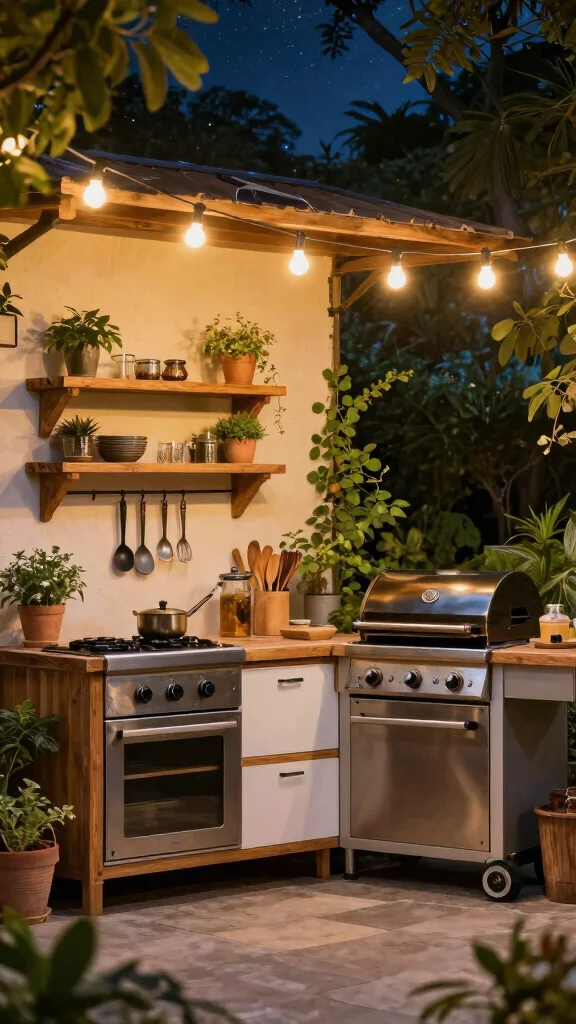
If your kitchen opens to an outdoor area, consider solar-powered lights to brighten up your space sustainably. These fixtures are perfect for illuminating patios or outdoor cooking areas, harnessing the sun’s energy during the day and casting a gentle glow at night. Available in styles ranging from freestanding to wall-mounted, they enhance your outdoor dining experience while contributing to a greener planet. Plus, they help cut down on electricity costs.
Here are some tips for effective use:
– Ensure proper placement to capture maximum sunlight.
– Choose durable materials to withstand outdoor conditions.
– Opt for adjustable designs to direct light where needed.
These solar lights can transform your outdoor kitchen into an inviting space, perfect for gatherings or quiet evenings under the stars.
Fun fact: Solar-powered outdoor lights cut energy use by up to 70% compared to wired options. They charge all day and glow softly at night, powered by your sun-friendly kitchen lighting plan. Install freestanding or wall-mounted styles to extend your outdoor cooking spaces.
4. Recessed Lighting

Recessed lighting offers a sleek, contemporary look that seamlessly integrates into your kitchen design. Installed within the ceiling, these fixtures provide unobtrusive illumination that can highlight specific areas, such as workspaces or decorative features. Utilizing LED recessed lights not only ensures energy efficiency but also helps create a bright, inviting atmosphere. Adjustable fixtures can direct light where it’s most needed, enhancing both functionality and style.
Keep these points in mind for optimal results:
– Plan proper spacing to avoid dark spots.
– Select dimmable options for varied lighting moods.
– Combine with other lighting types for a layered effect.
Recessed lighting can elevate your kitchen’s overall design while providing an efficient and polished look that feels both modern and inviting.
5. Eco-Friendly Light Fixtures
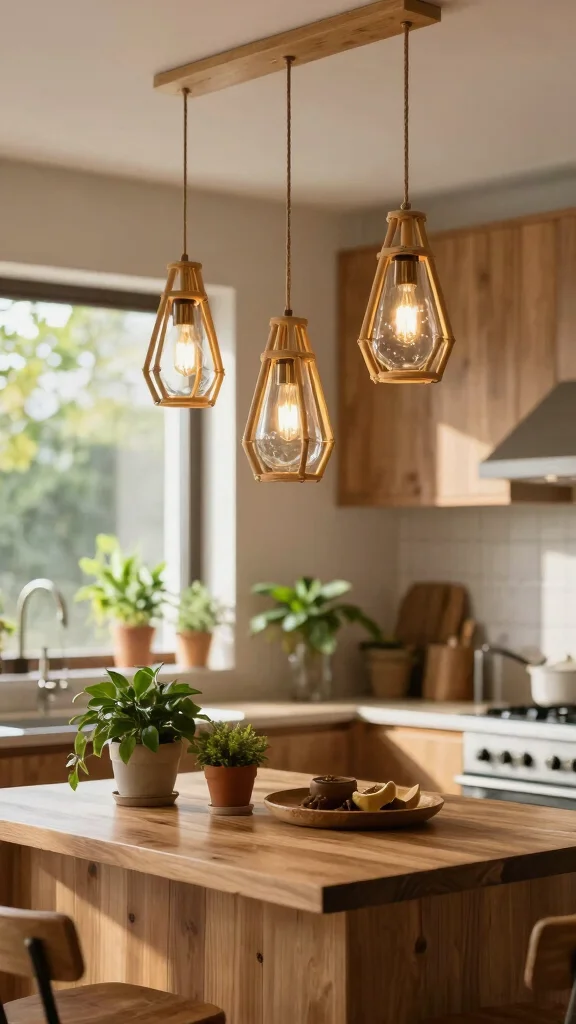
Choosing eco-friendly light fixtures not only supports sustainable living but also adds unique charm to your kitchen. Look for options made from recycled materials or sustainably sourced woods, like bamboo pendant lights or glass fixtures crafted from reclaimed bottles. These distinctive designs not only showcase your commitment to sustainability but also infuse warmth into your kitchen space.
Consider these benefits:
– Unique aesthetics that stand out in your decor.
– Support for environmentally conscious brands.
– Durable materials that contribute to less waste.
By incorporating eco-friendly lighting, you create a beautiful kitchen that aligns with both style and sustainability.
6. Smart Lighting Systems

Integrating smart lighting systems into your kitchen is a fantastic way to enhance convenience and energy efficiency. These systems enable you to control your lights using a smartphone or voice commands, making it easy to adjust brightness and set schedules. With LED smart bulbs, you can also change colors to create the right mood for any occasion.
Here are some advantages of smart lighting:
– Customize ambiance for cooking or entertaining.
– Save energy with programmable settings.
– Integrate with other smart devices for a cohesive experience.
Smart lighting elevates your kitchen’s functionality and style, turning it into a more enjoyable space to cook and gather with loved ones.
7. Layered Lighting Approach
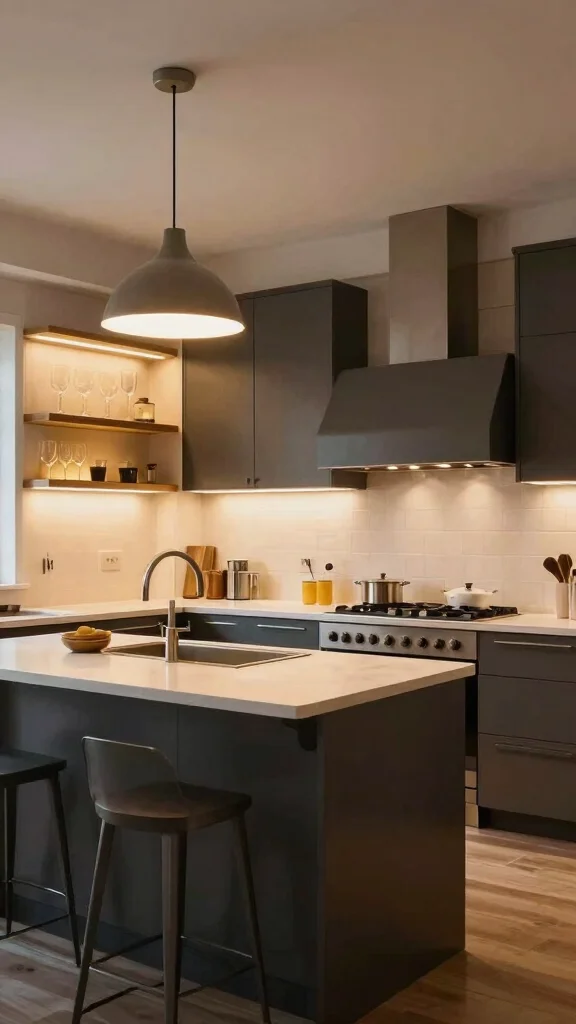
A well-planned kitchen lighting scheme should embrace a layered approach, blending ambient, task, and accent lighting. This method not only creates depth but also enhances functionality while ensuring a warm and inviting atmosphere. Ambient lighting provides overall illumination, while task lighting focuses on specific areas like countertops, and accent lighting showcases architectural features or decor.
To achieve this balanced effect:
– Combine ceiling fixtures with under-cabinet lights.
– Incorporate pendant lights over dining areas.
– Use accent lights to highlight artwork or features.
This comprehensive strategy transforms your kitchen into a versatile space, expertly tailored for cooking and entertaining.
Key Trade-offs & Our Top Pick
Pendant Lights with LED Bulbs
– Pros:
– Stylish design options that can enhance kitchen decor.
– Energy-efficient, saving you money in the long run.
– Cons:
– Installation might require professional help if you’re not handy.
– Can cast shadows if not placed correctly.
– Best for: A kitchen that needs a focal point and functional lighting at the same time.
Under-Cabinet Lighting
– Pros:
– Provides excellent task lighting for countertops.
– Easy to install and can be a DIY project.
– Cons:
– Limited to under-cabinet areas, not suitable for general lighting.
– Bulbs may need replacing after a while, depending on usage.
– Best for: Home chefs who need focused lighting for cooking tasks.
Smart Lighting Systems
– Pros:
– Allows you to control lighting with your smartphone or voice.
– Can change colors and brightness for different moods.
– Cons:
– Higher initial cost compared to traditional lighting.
– May require a stable Wi-Fi connection to function properly.
– Best for: Tech-savvy individuals who enjoy customizing their kitchen lighting.
Recessed Lighting
– Pros:
– Sleek design that saves space and looks modern.
– Provides even ambient lighting throughout the kitchen.
– Cons:
– Installation can be complicated and may require ceiling modifications.
– Not ideal if your kitchen has low ceilings, as it can make the space feel cramped.
– Best for: Those who want a clean, minimalist look in their kitchen.
Eco-Friendly Light Fixtures
– Pros:
– Made from sustainable materials, reducing environmental impact.
– Often energy-efficient, saving on electricity bills.
– Cons:
– Styles may be limited compared to conventional fixtures.
– Initial cost may be higher for eco-friendly options.
– Best for: Homeowners who prioritize sustainability in their decor choices.
Expert Recommendation:
Best Overall: Under-Cabinet Lighting
Under-cabinet lighting strikes the perfect balance between functionality and aesthetics. It’s budget-friendly and easy to install, making it accessible for most homeowners. This option provides essential task lighting for cooking while adding a warm ambiance to your kitchen. It enhances visibility in work areas without overwhelming your space.
Why We Picked This:
While under-cabinet lighting is a fantastic choice for many, other options might suit your needs better. If you love modern aesthetics, pendant lights could really elevate your space. On the other hand, smart lighting systems are perfect for those who want full control over their kitchen ambiance. Remember, the best choice depends on your lifestyle and design preferences.
8. Color-Changing LED Lights

Color-changing LED lights introduce a lively and dynamic element to your kitchen. These versatile fixtures allow you to select different colors to match your mood or the occasion, making them ideal for gatherings or cozy family dinners. You can install them under cabinets, around islands, or within recessed fixtures for a splash of color.
Consider these tips:
– Use color-changing lights as accents to highlight specific areas.
– Schedule colors to suit different times of day or activities.
– Explore smart options for easy control and automation.
This playful feature can breathe new life into your kitchen, leaving a lasting impression on your guests.
Fun fact: Color-changing LED lights can cut energy use by up to 40% when you schedule them for dinners as part of your kitchen lighting plan. Play with moods, but keep the kitchen efficient. Use them as accents under cabinets or islands for color without waste.
You might also like
9. Vintage-Style Light Fixtures
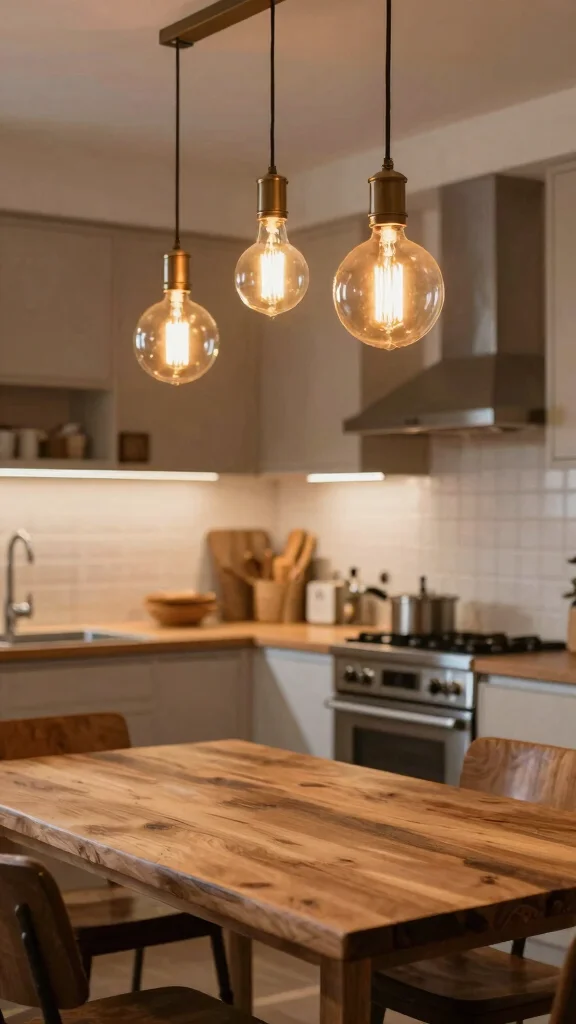
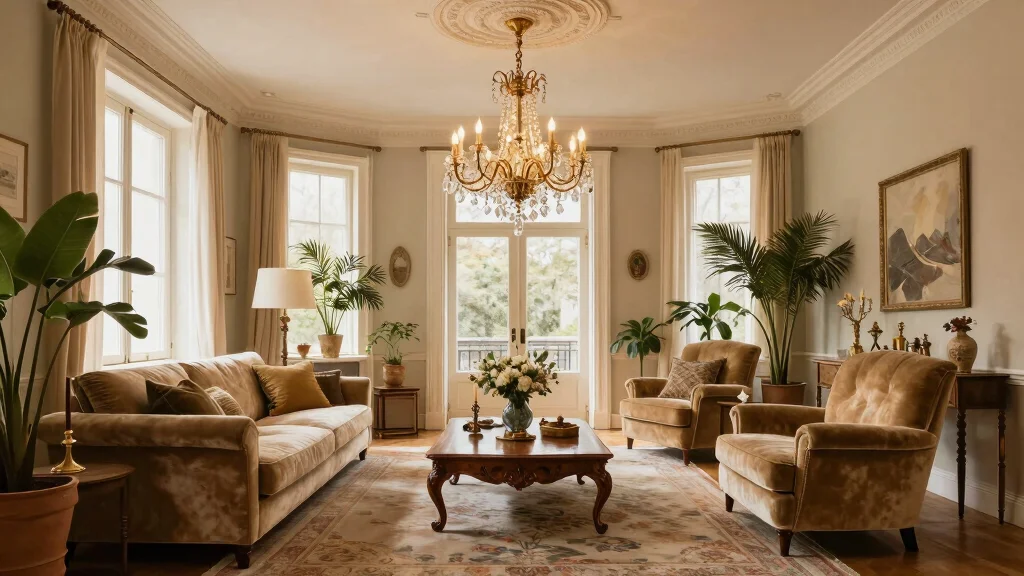
Vintage-style light fixtures bring a sense of nostalgia and character to modern kitchens. From Edison bulb pendants to ornate chandeliers, these options serve as striking statement pieces that complement rustic or farmhouse aesthetics. Incorporating vintage lighting enhances your kitchen’s charm while providing practical illumination.
Consider these suggestions:
– Pair vintage fixtures with modern elements for an eclectic look.
– Ensure compatibility with energy-efficient bulbs.
– Use warm-toned bulbs to emphasize the vintage vibe.
These fixtures celebrate history while enhancing functionality, creating a kitchen that feels both inviting and stylish.
10. Statement Chandeliers
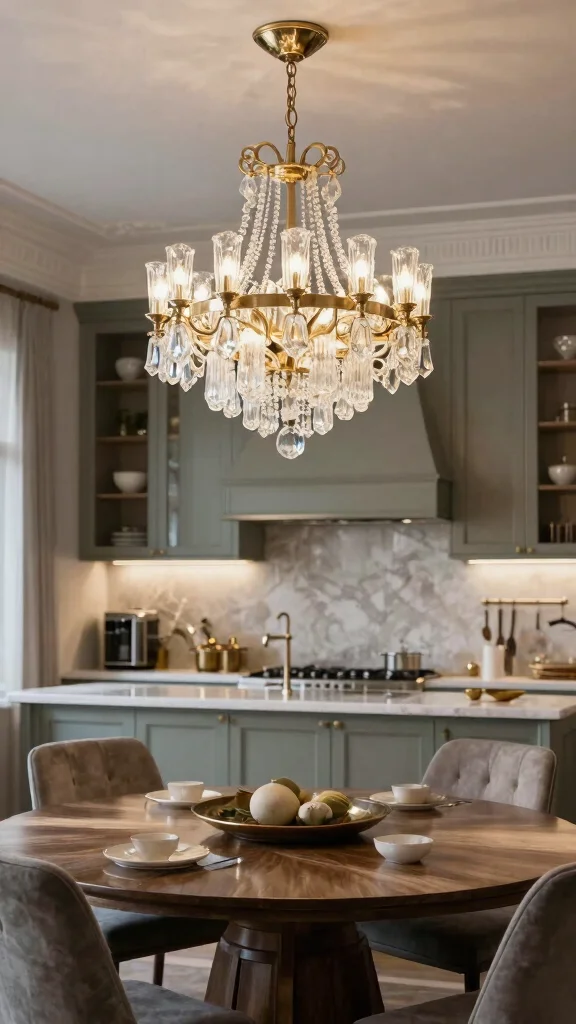
A statement chandelier serves as a stunning focal point in your kitchen, elevating its entire ambiance. Whether you opt for a modern geometric design or a classic crystal chandelier, the right fixture showcases your unique style. Ideal for placement over kitchen islands or dining tables, they bring a touch of luxury and sophistication.
When choosing a chandelier, remember to:
– Ensure it suits the scale of your kitchen.
– Select a design that complements your overall decor.
– Choose dimmable options for flexible lighting.
A statement chandelier can transform your kitchen into a breathtaking space while maintaining its functionality.
11. Energy-Efficient Bulbs
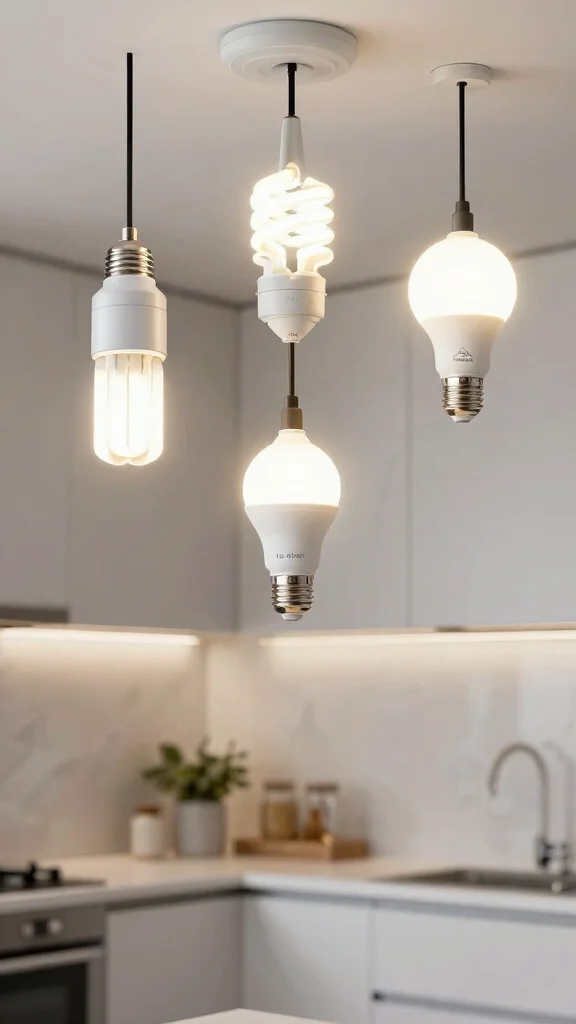
Making the switch to energy-efficient bulbs is one of the easiest ways to enhance your kitchen lighting while cutting down on energy costs. LED bulbs are a popular choice due to their longevity and minimal energy usage, providing bright, clear light perfect for cooking. Available in various color temperatures, you can select soft, warm light or bright daylight to match your kitchen’s ambiance.
Key benefits include:
– Lower electricity bills thanks to reduced energy consumption.
– Longer lifespan compared to traditional bulbs, minimizing waste.
– Multiple styles available to fit any decor.
Adopting energy-efficient bulbs is a small adjustment that makes a significant impact on your kitchen and the environment.
12. Wall Sconces for Dim Lighting

Wall sconces are a stylish option for adding soft, ambient lighting to your kitchen. Strategically placed along walls, they create a warm atmosphere without taking up valuable counter space. With a range of styles from vintage to modern, wall sconces can enhance your kitchen’s decor.
When choosing wall sconces, consider:
– Styles that complement your existing decor.
– Soft glow bulbs for a relaxing ambiance.
– Installation at eye level for maximum effect.
Wall sconces not only provide functionality but also add flair, making your kitchen a welcoming space.
13. Bright Colored Fixtures
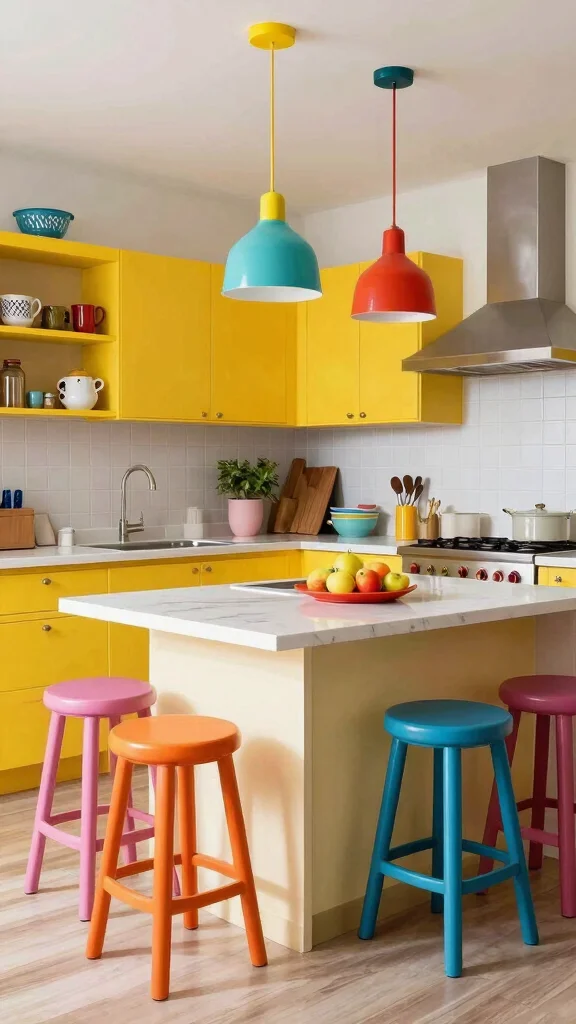
Incorporating bright-colored fixtures into your kitchen lighting plan adds a playful burst of color that enlivens the space. Consider colorful pendant lights or whimsical table lamps that create focal points and draw the eye. These fun elements can break the monotony of neutral palettes, reflecting your personality and style.
For adding color effectively:
– Use colorful fixtures as accents to avoid overwhelming your decor.
– Choose hues that complement your kitchen’s overall color scheme.
– Mix and match shapes and sizes for an eclectic vibe.
Bright colored fixtures inject joy into your kitchen, making it a delightful place to cook and socialize.
14. Task Lighting for Specific Areas

Effective kitchen lighting goes beyond general illumination; task lighting is crucial for enhancing visibility in food prep areas. Install focused lighting above countertops and stovetops to ensure adequate brightness for chopping and cooking. Options like adjustable track lighting or small under-cabinet fixtures can significantly improve functionality.
Keep these considerations in mind:
– Position lights to minimize shadows while working.
– Select fixtures that can be adjusted for directional lighting.
– Use bright, white bulbs that replicate natural light for optimal visibility.
Adding task lighting creates a safer, more efficient cooking environment, making meal preparation a pleasurable experience.
You Might Also Like
15. Creative Light Designs
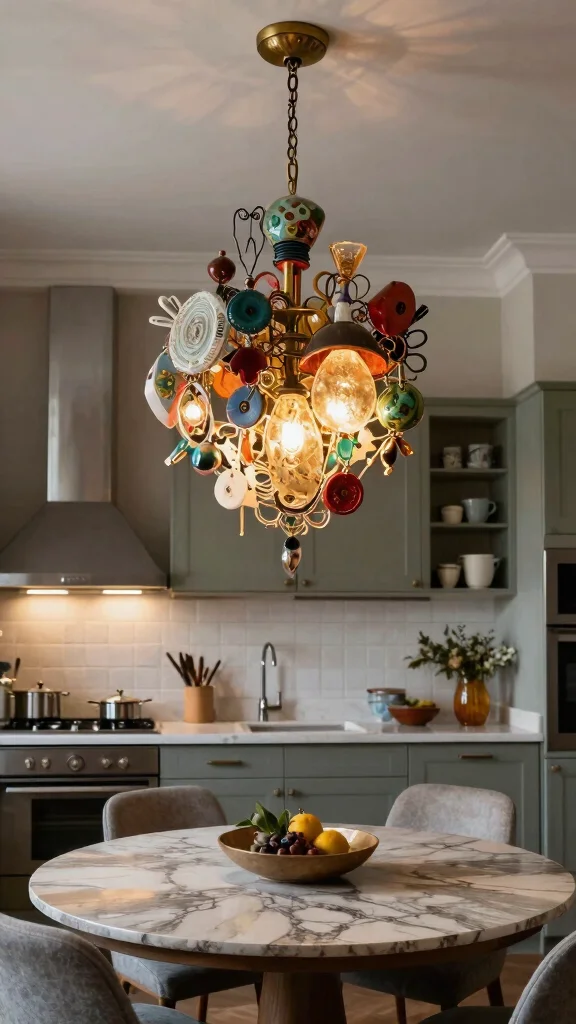
Getting creative with your light designs can truly set your kitchen apart and reflect your personal style. Seek out unique fixtures that incorporate artistic elements, such as sculptural designs or multi-tiered lighting. These can serve as beautiful centerpieces while still providing functional illumination.
Here’s how to achieve this look:
– Choose fixtures with striking shapes or unusual materials.
– Don’t shy away from mixing different lighting styles for an eclectic vibe.
– Ensure they meet your functional lighting needs despite their artistic flair.
Creative lighting can transform your kitchen into a visually stunning space that enhances both aesthetics and usability.
16. Minimalist Light Fixtures
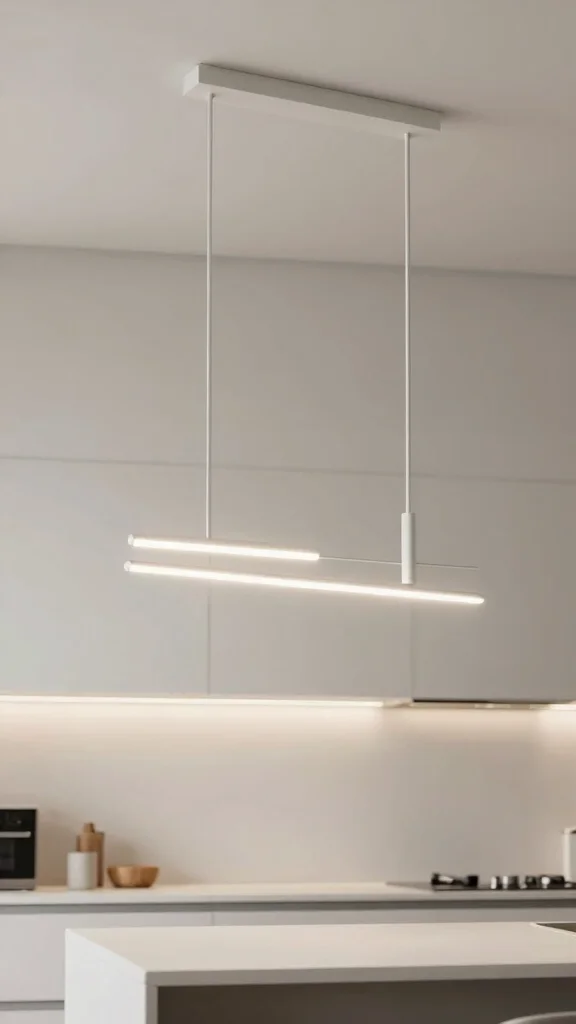
For those who appreciate a clean and clutter-free aesthetic, minimalist light fixtures can be an excellent choice for your kitchen. These designs emphasize simplicity, utilizing clean lines and neutral colors to deliver understated elegance. Minimalist lighting complements modern kitchen designs beautifully, enhancing the overall look without overwhelming the space.
Consider these points for minimalist lighting:
– Look for fixtures that blend seamlessly into the ceiling or walls.
– Opt for neutral or monochrome colors to maintain a cohesive appearance.
– Ensure they provide adequate light for functionality while remaining unobtrusive.
Minimalist lighting creates a serene and sophisticated atmosphere, perfect for those who value simplicity.
17. Eco-Conscious Decorative Lighting
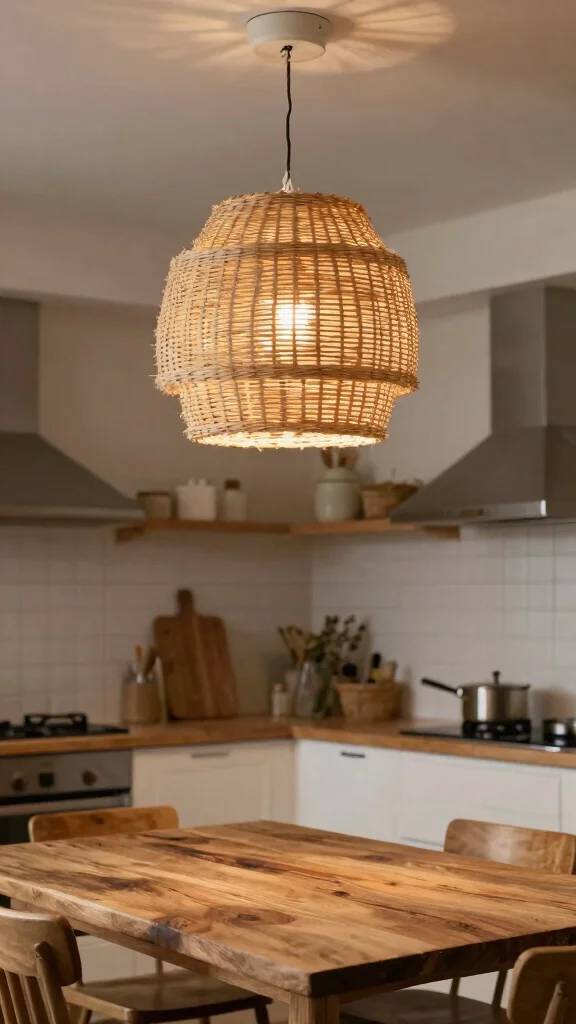
For those looking to elevate their kitchen’s aesthetics while being eco-conscious, decorative lighting made from sustainable materials is a fantastic choice. These lights can include woven fixtures crafted from natural fibers or ornate chandeliers made from reclaimed wood. They add character and charm while supporting sustainable practices.
Here’s what to consider:
– Select pieces that highlight natural materials and craftsmanship.
– Choose lighting that utilizes energy-efficient bulbs to further reduce your carbon footprint.
– Ensure the designs align with your kitchen’s overall theme.
Eco-conscious decorative lighting can beautifully transform your space while blending style with sustainability.
18. Layered Task Lighting

Layered task lighting focuses on strategically placing various types of lighting to enhance functionality in specific work areas. By combining pendant lights, focused recessed lighting, and under-cabinet fixtures, you can create well-lit zones tailored to your cooking tasks. This approach not only improves visibility but also adds dimension and interest to your kitchen design.
For effective implementation:
– Use multiple light sources to reduce shadows.
– Ensure lights are adjustable for maximum versatility.
– Combine warm and cool tones to establish a balanced atmosphere.
Layered task lighting significantly enhances both the efficiency and beauty of your kitchen, making cooking and entertaining a pleasure.
Conclusion
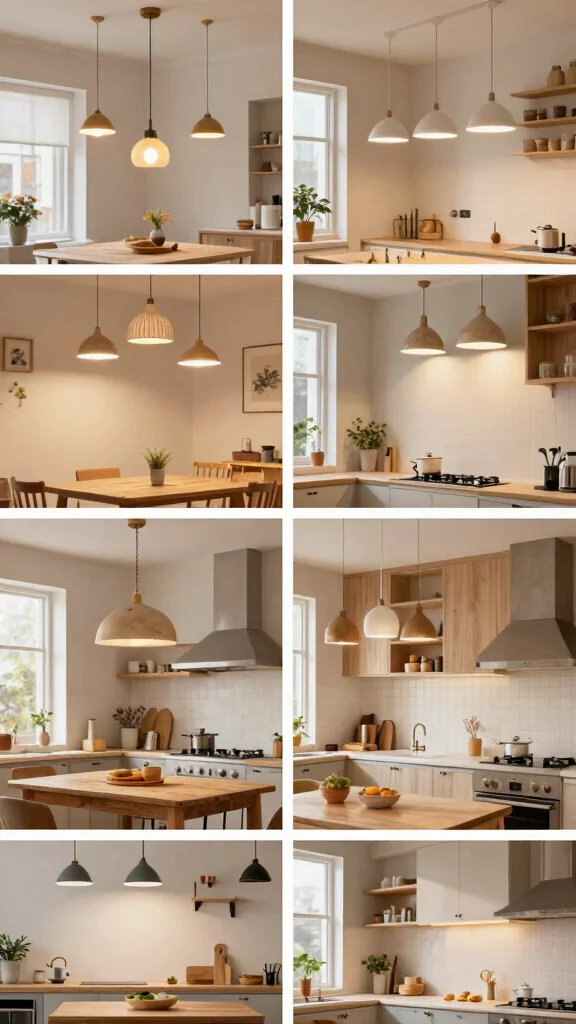
A thoughtfully designed kitchen lighting plan can create a space that’s bright, inviting, and functional.
With so many sustainable options available today, you can enhance your kitchen with style while remaining eco-conscious.
From pendant lights to energy-efficient bulbs, each choice contributes to an atmosphere that inspires culinary creativity and social gatherings alike.
Frequently Asked Questions
What is a kitchen lighting plan and why is it important for a sustainable kitchen?
A kitchen lighting plan is a smart map of where you place lights to cover ambient, task, and accent needs while saving energy.
It helps you avoid over-lighting, reduce wattage, and use daylight effectively. Start by measuring the space and noting zones for cooking, prepping, dining, and cleaning. Choose LED kitchen fixtures with high efficiency, and layer your lighting with ceiling, under-cabinet, and pendant options. Use dimmers and sensors to tailor light levels and minimize waste. A well-designed kitchen lighting plan improves safety, mood, and energy bills.
How can I design a sustainable kitchen lighting plan using LED kitchen fixtures?
To design a sustainable kitchen lighting plan, start with LED kitchen fixtures that are energy-efficient and long-lasting. Combine ambient overhead LEDs, under-cabinet LED strips for task lighting, and a few pendant lights for style. Choose a color temperature around 2700–3000K for warmth and a high CRI for true colors. Use dimmers and smart controls to adjust brightness by time of day. Plan for daylight integration with windows or skylights, and use daylight sensors to reduce artificial light when sun is available. Opt for fixtures with replaceable LEDs or long-life modules to minimize waste.
What are the best ambient kitchen lighting ideas to achieve a well-lit, energy-efficient space?
Think in layers: ambient, task, and accent lighting. Start with recessed LED ceiling downlights for even coverage, add cove lighting or a wall-wash to soften shadows, install under-cabinet LED strips for crisp task light, and hang a few pendant lights over the island for style. Use dimmers and occupancy sensors to save energy when rooms are empty. Aim for an ambient glow that supports safety and mood without blasting energy use. For an eco-friendly kitchen, favor LEDs and smart controls.
How do I choose modern kitchen lights that are both stylish and easy on the environment?
Modern kitchen lights can be bold or minimal while still sustainable. Look for LED-based fixtures, energy-efficient options, and durable materials. Consider integrated LED panels or pendant clusters with replaceable components. Choose color temperatures around 2700–3000K for warmth, and go for a high CRI to show true colors of food and decor. Prefer fixtures with ENERGY STAR or low wattage. Pair with dimmers and smart timers to reduce standby energy. Finally, think about long-term maintenance and repairability to lower waste.
What practical steps can I take to balance function, style, and cost in my kitchen lighting plan?
Start with a clear budget and map out zones: high-traffic prep areas, cooking zones, and dining corners. Layer lighting with a mix of task lighting under cabinets, ambient ceiling lights, and a few statement pendants. Choose LED kitchen fixtures with long life and low energy use, and install dimmers or smart controls to adjust lighting on demand. Maximize daylight during the day with window placement and light-colored interiors. Buy a couple of key pieces first and add supporting fixtures later to spread costs. This practical approach keeps function, style, and sustainability in harmony.
Related Topics
home decor
kitchen lighting design
sustainable solutions
LED fixtures
ambient lighting
modern kitchen lights
space optimization
energy efficiency
easy installation
budget friendly
minimalist design
kitchen makeover